.svg)

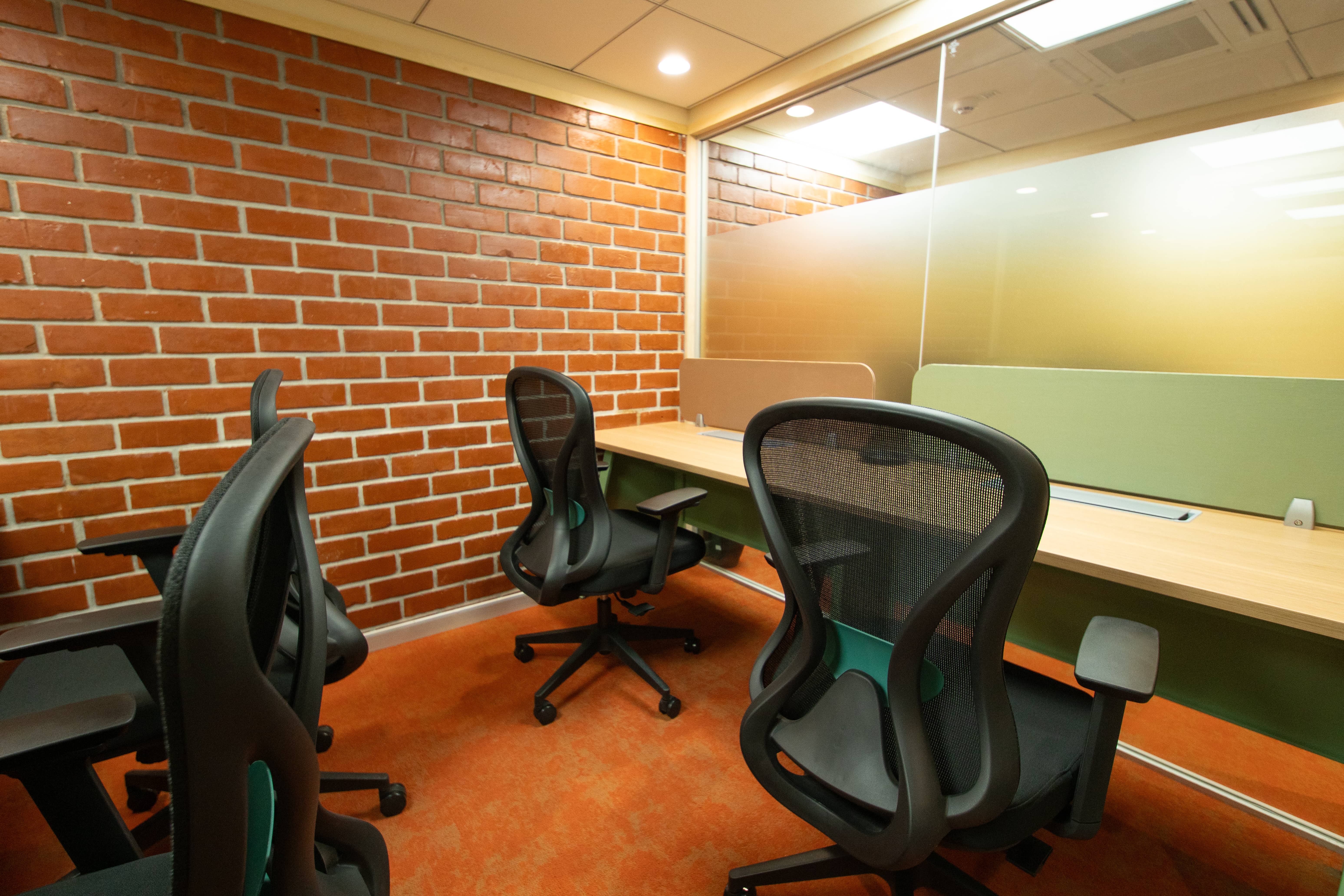
Choosing between coworking spaces (which tend to be open and community-focused) and managed office spaces (which offer private, operator-managed suites) depends largely on your team size, privacy requirements, and anticipated growth speed. While hybrid work has become a lasting norm, success hinges less on the physical location and more on workplace practices, culture, and design.

Coworking spaces vs managed offices spaces in India: what’s the difference?
At a high level, coworking spaces are shared office environments where individuals and teams work within a community, typically offering flexible memberships. They provide plug-and-play infrastructure, shared amenities, and the dynamic energy of other professionals.
Managed office spaces, often categorized with serviced offices, are private, dedicated suites managed by a provider who handles design, build or refurbishment, daily operations, and bundles services into a predictable monthly fee. This model is gaining popularity as hybrid work creates uneven attendance, yet businesses require a stable base to support culture, collaboration, and client interactions.
In India, flexible workspace users often prioritize quick move-in times, minimal administrative burden, and the ability to scale rapidly without lengthy procurement processes. This approach is especially favored by startups, project teams, and distributed organizations seeking agility and efficiency.
Pros and cons of co working spaces and collaborative working spaces
Key advantages of co working spaces
Speed and Simplicity: Flexible workspaces enable rapid startup with minimal setup, making them ideal for testing new markets, hiring in waves, or occasionally bringing remote teams together.
Built-in Collaboration: Top collaborative spaces optimize shared areas, meeting rooms, and informal “collision points” that foster faster problem-solving and community-driven learning.
Flexibility for Hybrid Work: With varying attendance throughout the week, flexible access options such as day passes, multi-day passes, or roaming memberships help reduce wasted capacity by supporting hybrid work patterns without the commitment to fixed desks.
Trade-offs to plan for
Less Control Over Privacy and Brand: Shared coworking environments may pose challenges if your work involves confidential information, regulated data, or frequent client meetings. In such cases, having access to phone booths, private meeting rooms, or dedicated cabins is essential to maintain focus and protect sensitive discussions.
Noise and density variability: Some coworking operators run high-density floors. If you’re doing deep-focus work, you’ll want quieter zoning, acoustic treatment, and clear etiquette.
Pros and cons of Managed offices spaces and serviced offices
Key advantages of managed offices spaces
Privacy + a “home base” for teams: Managed suites give you control over your environment ideal for consistent rituals, onboarding, and a stable company workplace experience.
Operational offload: Managed models bundle services such as front desk, housekeeping, IT coordination, utilities, and facility operations into one accountability layer, which can reduce internal admin time.
Better fit for intentional culture-building: Research indicates performance and wellbeing depend heavily on norms and supportive culture, not just location. Gartner found hybrid and on-site employees were equally likely to be rated “highly productive” in a manager survey, reinforcing that management and culture matter as much as place.
Trade-offs to plan for
Higher Monthly Commitment Than Basic Coworking: Managed office suites generally come at a higher cost per seat compared to hot desks, reflecting the added value of enhanced control, privacy, and a dedicated workspace.
Change Management Still Required: Simply having a managed suite won’t resolve challenges like meeting overload, unclear priorities, or continuous messaging. As Microsoft highlights, establishing clear boundaries is essential to ensure flexible work doesn’t turn into a constant “always-on” mode.
Cost and service comparison for office spaces
Consider the Total Cost of Occupancy (TCO) rather than just the “per seat” price. Traditional leased offices often involve lengthy fit-outs and vendor management, while flexible workspace formats bundle much of these costs into a predictable monthly service fee (Opex), simplifying budgeting and operations.

Service scope: Coworking typically includes Wi‑Fi, common areas, and shared amenities. Managed offices expand the scope: private access, dedicated layouts, and often more custom operational support. For example, away.center describes running private cabins and modular work zones across locations, and also offering to design, build, and manage workspaces for teams illustrating how managed inventory can sit alongside coworking access models.
Ideal customer profiles and hybrid scalability
For many office-based jobs, hybrid work is becoming more common, with fewer than five days spent in the office per week. According to a McKinsey & Company study conducted in the fall of 2022, office workers who participated in the survey worked an average of 3.5 days a week, which is less than what they were before the pandemic. The need for more flexible workplace options is supported by this trend.
Coworking is ideal if you are
Individuals who prioritize flexibility, such as solo professionals, creators, consultants, freelancers, and early-stage teams; new-market pilots; teams that occasionally require shared meeting rooms; or hybrid staff who seek a predictable environment without a full-time lease.
Managed offices are ideal if you are
Growing teams that require privacy; client-facing services (finance, legal, sales, and advisory); teams handling sensitive data; businesses that are hiring rapidly; or organizations that require a branded workplace with a uniform experience across locations.
Quick checklist: how to choose
- Choose coworking if your headcount fluctuates monthly and you want maximum flexibility.
- Choose managed offices if you need privacy, compliance comfort, and predictable team rituals.
- If your meetings are client-heavy, prioritise a managed suite (plus meeting room credits).
- If your hybrid pattern is 2–3 days/week, consider flexible passes + occasional team rooms.
- If you’re scaling, pick a provider with multiple cabin sizes and clear expansion paths.
Designing an office for performance: workplace space, facilities, and experience
Additionally, your decision should be in line with how you plan an office for actual work. The office must be worth the commute in hybrid environments in order to foster team identity, deep focus, and excellent collaboration.

Key design and facilities considerations:
- Zoning: quiet focus areas, collaboration zones, and phone booths reduce friction between deep work and meetings.
- Meeting quality: AV reliability and booking predictability matter more than “more rooms.”
- Wellbeing signals: light, air quality, and comfortable furniture support sustained output and lower burnout risk (and align with what employees increasingly value).
- Trust and autonomy: OECD notes teleworking has evolved into a more permanent change; workplace policies that build trust are critical in hybrid models.
Booking and contract differences: memberships vs managed suites
The most common types of coworking reservations are day passes, multi-day passes, or monthly memberships. These are perfect for hybrid teams in particular when you need flexibility. The cross-city pass model from away.center is an excellent illustration of "access when needed" placement. Contracts for managed offices typically function similarly to private suite service agreements, with a single operator responsible for operations, clearer SLAs, defined inclusions, and upgrade paths. When compared to renting and handling everything yourself, this frequently lessens vendor sprawl.
Conclusion
The best option is the one that best suits your working style: coworking spaces and collaborative workspaces are superior due to their speed and flexibility; Privacy, cultural development, and operational control are all advantages of managed office spaces. Now that hybrid work is a permanent trend, think of your workplace as an operating system built for concentration, trust, and excellent teamwork. Examine away.center's memberships and managed options if you're looking for a workspace that combines scalable private suites with serene, design-led focus. Then, schedule a tour to determine the best combination for your team.
Book a hub tour with away coworking in koramangala
FAQs
What is the difference between coworking spaces and managed offices spaces?
Coworking is shared by design with flexible memberships; managed offices are private suites run for your team with more control, privacy, and operational support.
Are managed offices the same as serviced offices?
They’re closely related. Both bundle services into a monthly fee; “managed office” often implies more customisation and ongoing operations management.
Which is better for hybrid working in India?
If attendance is uneven, coworking or flexible passes work well. If you need a stable culture hub for onboarding and client work, managed offices fit better.
How do costs compare in the long run?
Coworking reduces upfront costs; managed offices can be more cost-effective than leasing when you factor in fit-out time, procurement, and facilities management overhead.
.jpg)
.png)