.svg)


We are at a turning point in modern work. Professionals are yearning for a more mindful workspace after years of working from home and in cramped open offices. The way our surroundings influence our thoughts and performance is just as important to the future of work as where we work. Welcome to the age of mindful coworking spaces, where well-being, focus, and design all come together. This blog examines the reasons behind the shift in workspaces, the rise of productivity-first coworking, and how one company is leading the way in the development of flexible offices in India's largest cities.
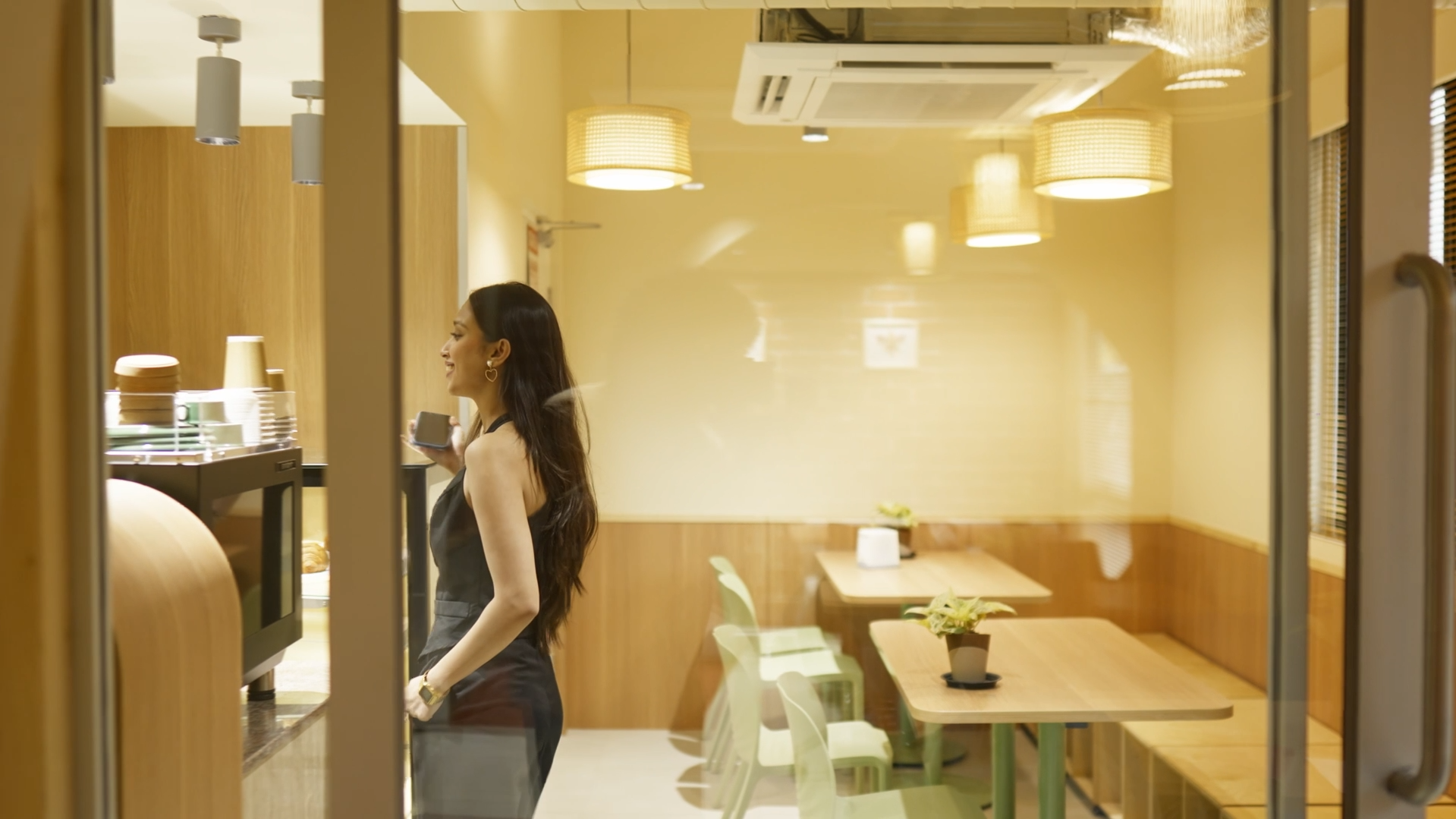
Why workspaces are changing ?
- Remote Work Fatigue & Distractions: Although working remotely provided flexibility, it also brought with it new difficulties. When working from home, many employees report feeling unfocused and burnt out; only 31% of workers say they are fully focused every day, and almost one in four say they hardly ever achieve deep concentration. A sense of constantly being "on" and video-call fatigue, which affects about 80% of workers, are caused by blurred boundaries between work and home. People are looking for more structured, committed work environments as a result of this remote work fatigue.
- Noisy Traditional Offices: On the other hand, conventional workplaces are loud and prone to interruptions, especially those with open-plan layouts.Talking coworkers, ringing phones, and constant activity may all interfere with concentration. Actually, over half of coworking customers report problems with noise and distractions, and the same proportion think that regular shared workplaces aren't private enough. The result? Professionals feel busy but aren't productive since they are interrupted all the time. Both extremes loud corporate floors and remote home offices are making people reevaluate what a productive workplace should be.
- Need for Focus and Flexibility:Individuals are looking for a modern workplace that balances calm focus with the freedom to work autonomously. They want the flexibility of working from home without the disadvantages of loneliness or domestic distractions. They also want the social spirit of an office without the pandemonium. Because of this, flexible office space options that offer quiet spaces, drop-in workstations, and customisable designs are growing in popularity. From a basic desk, the workstation has developed into a functional area that optimises comfort, concentration, and clarity.
- The shift toward productivity-first coworking :The coworking model itself is evolving as well. Coworking spaces were first all about buzz, transparent cooperation, and chic design. These days, the most effective coworking spaces place more emphasis on intentional design, wellness, and serious work than on casual socialising. Coworking spaces are evolving from "casual hangouts" to well-considered workplace designs that promote focus and serenity, especially in India:
- Focus Over Frenzy: More and more individuals are coming to the conclusion that peace is better than turmoil when it comes to doing high-quality work. More beanbags and ping-pong tables are being replaced with libraries, phone booths, and "silent zones." "Calmer performance, not louder collaboration" is the current call.Providers of coworking spaces are aware that by offering a place of concentration, they are giving members a competitive advantage. According to one industry report, people "are craving environments where they can actually get things done," Deep work is now the key to productivity.
- Design for Deep Work: Calm and intentional design go hand in hand. A really effective desk is designed to be more comfortable and less distracting. Think about natural lighting, acoustic panels, and straightforward designs. Research indicates that even little design adjustments, such relocating noisy equipment or installing sound-absorbing furniture, can enhance focus in a shared office. In modern coworking spaces, soft colour schemes and biophilic elements (plants, sunshine) are favoured to promote tranquillity. silent floors or "quiet hours" are being implemented in several locations. Instead of being dragged out of a state of flow, the aim is for your environment to pull you into it.
- Wellness at Work: Coworking is being redefined by this move toward quality, calm, and attention. It's the rise of what is known as the "fourth wave of work" wellbeing-forward, design-led workspaces that promote concentration, productivity, and interpersonal relationships. To put it another way, coworking is maturing and eschewing hype for real value.
How away Is building the next-generation coworking experience
Amid this development, Away has established itself as one of India's first coworking spaces that prioritises productivity and mindfulness. Since the beginning, away.center has been redefining work by creating environments that are intimate, adaptable, and profoundly human. With coworking spaces in Bangalore, Kolkata, and Vizag, among other locations, away is creating a unique experience for its clients. Here's how we're constructing the coworking of the future:
- Quiet Zones & “Deep Work” Culture: Your loud startup garage is not here. Away is actually a peaceful workstation that doubles your productivity, not a desk rental service. Deep work and quiet thought are emphasised at each center.Members can withdraw for concentration in quiet spaces, focus pods, and library-like nooks. Although "noise" is discouraged, intentional collaboration is encouraged; even community gatherings are planned so as not to disrupt the work atmosphere. In order to avoid disturbing you, regular pop-up events are conducted "in our own way." By giving acoustics and manners first priority, away fosters an atmosphere where you can actually hear what you're thinking. In busy locations like Bangalore, where teams now use attention as a competitive advantage, this is a key component of their value offer.
- Design-Led, Wellness-Forward Spaces: You'll see the change as soon as you enter an away center. Because each site is design-led, the interiors are created with a specific goal in mind. Anticipate cosy, domestic elements—"woody, bohemian" designs that evoke a sense of comfort—combined with simple designs that promote serenity and clarity. There are lots of indoor plants, lots of natural light, and lots of open spaces to breathe (both physically and symbolically). Features like ergonomic workstations, plant-filled alcoves, and sunlight lounges are all part of this wellness-forward design. Some retreat facilities also provide weekly health workshops and yoga or meditation studios to its members. It all comes down to designing a workstation that feels revitalising and looks high-end.
- Flexible Plans & Managed Office Solutions: At the core of Away's model is flexibility. Recognising that there is no one-size-fits-all solution, away provides adaptable coworking alternatives for both huge teams and lone freelancers. In Bangalore for a day and in need of a hot desk? A month's worth of office space for your team in Kolkata? An office space in Vizag that is completely managed for a project lasting a year? Away has you covered. When compared to conventional 5-year leases, members benefit from flexible options that don't have any long-term lock-ins. Away's managed office solutions are revolutionary for expanding businesses. They will create, construct, and run a private office for you on their property (with your layout and branding), giving you the freedom and conveniences of coworking combined with the privacy of a dedicated office.
- Pan-India Presence, Local Soul: Crucially, we are constructing these cutting-edge areas throughout India's major centers. Now operating in the startup capital of Bangalore (Koramangala), the established commercial hub of Kolkata (Dalhousie), and the emerging tech metropolis of Visakhapatnam/Vizag (Daba Gardens), we are building a network of mindful workplaces throughout India. Every site has been carefully selected in desirable locations with excellent connections and a vibrant professional community. (For example, Koramangala is perfect for Away's main Bangalore hub because of its thriving startup ecosystem.) Whether you're a remote worker in Vizag or an entrepreneur in Bangalore, away guarantees that you have access to a first-rate, focus-friendly coworking space by growing "one well-crafted workspace at a time" across several locations.

To put it briefly, away is creating a distinctive service by fusing community, design, quiet, and flexibility. It's creating environments that enable you to work better, not harder, as the workplace of the future needs. Let's now examine the essential components that, in the current environment, make any coworking space genuinely outstanding.
What makes a great coworking space today
Any contemporary coworking space that aspires to be "great" should be exceptional in a few key ways. Creating the best collaborative office while yet honouring individual attention and different demands is more important than simply providing free coffee or stylish décor. Today's top coworking spaces are built on these three pillars:
Design That Improves Focus
The foundation of a productive workstation is intelligent design. Layout, lighting, and acoustics are all important factors in sustaining focus. Human-centric design is used by excellent coworking spaces to reduce distractions:
- Natural Light & Biophilic Elements: Greenery and plenty of sunlight are necessities, not extravagances. Natural light enhances mood and alertness, and green walls and plants provide a peaceful ambiance. Sunlit lounges, indoor plants, and even biophilic design elements that bring a little piece of nature within are becoming common features in many high-end environments. This thoughtful office design lowers stress and encourages calm.
- Sound Management: Acoustic planning is essential because noise is the enemy of concentration. Good coworking spaces make investments in quiet areas, soundproof phone booths, and noise-absorbing materials (such as rugs, curtains, or acoustic panels). Ambient noise may be greatly reduced with even little adjustments, such as putting printers in enclosed spaces or employing plants and bookshelves as sound absorbers. To ensure that everyone has access to a distraction-free place, the finest venues may establish "quiet hours" or set off entire floors as silent work zones.
- Ergonomic & Thoughtful Layout: Good design is in the details, from roomy workstations that don't squeeze workers together to adjustable chairs that promote posture. An activity-based design is the best layout as it includes locations for both open cooperation and private concentration. Tucked away from busy regions are high-focus locations. The room is set up to simply assist you in entering the zone. Members may therefore work more comfortably and for longer periods of time without getting tired. When office design is done well, the space itself becomes a tool for increasing energy, attention, and even creativity.

Flexibility in How Teams Work
One size doesn’t fit all in today’s work culture. A great coworking space offers flexible office solutions that accommodate various workstyles and team sizes:
- Hot Desks & Dedicated Desks: Hot desks offer on-demand workplace for individuals or independent contractors; simply take any available seat. For people who are always on the go or occasionally want a flexible workstation, this is ideal. Dedicated workstations provide a permanent desk with storage for frequent users who prefer a fixed location. Without the commitment of a lease, both choices provide a profitable platform for independent contractors.
- Private Cabins & Managed Offices: Teams frequently require branding or privacy that open seats cannot provide. Teams may now use private offices or cabins that are available at top coworking spaces. These managed office spaces are ready to use right away because they are completely furnished and IT-equipped. For instance, away.center provides teams with personalised studio offices that come with their brand and unique layout; it's like having a readymade office inside a coworking space. In this approach, startups or satellite teams may combine the plug-and-play convenience of coworking with the privacy and identity of a regular office. For businesses that are doing test projects or rapidly growing, this hybrid is perfect.
- Hybrid & Custom Work Models: Supporting today's mixed work patterns is another aspect of flexibility. Teams may mix and match with the top coworking providers. Maybe your business has a central private office that can accommodate ten people, but there are additional five seats available for use by rotating remote employees while they are in town. Or you manage a coworking program for startups, where a small business can begin with two seats and expand to twenty as it expands. A really flexible coworking operator will provide month-to-month terms, easy seat addition or reduction, and multi-city access cards that allow your staff to visit any location in the country. Because of this flexibility, even big businesses are incorporating coworking into their real estate plans; it allows them to grow and change without experiencing long-term issues.
Community Without Distraction
A sense of community has always been a selling point of coworking – the chance to network, collaborate, and be part of a vibrant community of professionals. But “community” should never come at the cost of productivity. Great spaces strike a balance by fostering collaboration when needed, but a professional vibe always:
- Curated Professional Atmosphere: Top coworking spaces curate their member base and culture intentionally. The goal is to bring together like-minded, respectful professionals – people who contribute to a positive work atmosphere. This isn’t a college dorm or a loud coffee shop; it’s a place of work first. Noise policies or etiquette guidelines are often in place to remind everyone to be considerate. The result is you get the buzz of working around talented peers without a cacophony.
- Networking & Events (Optional and Intentional): Yes, community events happen – from lunch & learn sessions to startup pitch nights – but they’re usually scheduled outside of core focus hours or in separate event areas. Participation is optional, so you can choose when to mingle and when to hunker down. Many professionals love that they can step out for a curated mixer or industry talk in the evening, yet spend their daytime undisturbed. The collaborative workspace element is there when you want it: break-out zones for impromptu chats, communal lounges to share ideas, and a community manager who introduces members to each other. But it’s all done with thoughtfulness – as away describes, “community built on sharing and genuine support, not just networking”. The best spaces even gather regular feedback to ensure the community offerings add value rather than distract.
- Supportive Services: A great coworking community also means access to help and resources without friction. Need IT support? A community manager is on it. Looking for a recommended accountant or a developer to hire? Your coworking network might have a lead. This kind of community support happens organically in well-run spaces. Members help each other out, refer business, or collaborate on projects. It creates a vibe of “we’re in this together” that you can’t get working alone at home. And it all unfolds in the background of a calm, professional environment designed to help you do your best work.
In conclusion, a fantastic coworking space nowadays is one that makes you feel relaxed but energised as soon as you walk in. Though not intrusive, the design is motivating. You are free to work alone or with others as necessary. Peers and possible partners are all around you, yet they all understand how important it is to concentrate. It's a contemporary workstation that allows you to work more efficiently than you might at home while still taking use of office amenities and companionship.
Why companies are moving to coworking spaces
It’s not just freelancers or startups embracing coworking – established companies and growing teams are making the switch to managed office space and shared work centers in droves. In fact, over half of corporate occupiers now use flexible workspaces as part of their strategy to control costs and support hybrid work. Here are the key reasons businesses are moving to coworking:
- Cost Efficiency: Office expenses can be greatly decreased via coworking. Compared to a regular office lease, employing a shared workspace might result in cost savings of 20–25% in India's main cities. Businesses avoid lengthy leases with large deposits and save money on upfront expenses (furniture, fit-outs). Budgeting is made simpler because all costs including rent, utilities, housekeeping, and internet are included in the one membership fee. A managed office solution eliminates infrastructure fixed expenses, which is very advantageous for startups and SMBs. According to one survey, flex rooms help even big businesses stay flexible and better control expenses. In essence, you only pay for what you require at the appropriate time.
- Scalability & Flexibility: Businesses like being able to scale up or down rapidly in a market that is changing frequently. Unmatched flexibility is provided by coworking; will you need to add five additional workstations next month? Are you expanding a project to a new city? While a traditional lease cannot accommodate that overnight, coworking operators can. There are no plans that are limited by a 5- or 10-year lock-in. Because of its scalability, businesses ranging from Fortune 500 companies to software startups are using coworking facilities to house teams. This concept is known as "pay as you grow"
- Prime Locations without Hassle: Coworking spaces are usually found in downtown areas and commercial districts. Both startups and MNCs value the opportunity to establish a presence in a desirable area (such as Mumbai's BKC or Bangalore's Koramangala) without having to deal with large landlords or spend months setting up an office. Companies can plug into a premium location right now since coworking providers like now or WeWork have already acquired Grade-A premises in key cities. It is very advantageous to be close to clients, talent pools, and transportation hubs. Additionally, coworking makes it quick and easy for businesses to test new markets or establish satellite teams; there's no need to build out offices or commit to lengthy leases; simply move into an existing space and get going.
- Ready Infrastructure & Services: Coworking offers a fully managed office space experience that goes beyond location. Desks, chairs, high-speed Wi-Fi, conference rooms with AV, printers, reception, security, and cleaning personnel are all set up and maintained for you when teams arrive at the office. It frees businesses from the burden of facility management so they may concentrate on their main tasks. Do you need IT help or coffee? Usually, it takes place on-site. Even tiny businesses may benefit from the type of amenities that large corporations could only afford thanks to these plug-and-play offices (think expensive boardrooms, breakout sections, event spaces). Particularly for businesses looking to impress clients and recruits with a professional setting without the typical overhead, this levelling of the playing field is a big lure.
- Talent Attraction & Retention: The modern workforce values flexibility and a lively work environment, particularly millennials and Gen Z. Coworking spaces frequently provide the type of contemporary, amenity-rich setting that attracts top talent. Young workers favour workplaces with imaginative decor, lounges, and wellness amenities over "boring, old-fashioned offices." By switching to a contemporary coworking space, businesses may give staff members a cool, team-oriented environment that improves morale. Crucially, flexible workspace alternatives provide workers greater autonomy (e.g., the opportunity to work remotely on some days and in a cool office on other days, or the flexibility to work from any branch of a coworking network). Job satisfaction and work-life balance may both benefit from this.
- Hybrid Work Enablement: Many businesses are reducing their owned offices and utilising coworking to serve remote staff as hybrid work becomes more common. It offers a dependable landing area where regional teams may occasionally meet or distant workers can work together a few times a week. Companies can use a hub-and-spoke strategy by offering memberships to coworking facilities close to where employees reside, as an alternative to requiring everyone to return to a single headquarters (with long commutes). This increases the talent pool (you may recruit someone in another city and yet provide them a "office" via a coworking membership) and reduces commute stress, which improves wellbeing. Coworking essentially serves as the foundation for remote-first and hybrid businesses, providing an on-demand workspace when physical presence is required.
Because of all these advantages, flexible workspaces are becoming more and more popular in India's office industry. Flex spaces accounted for around 15% of all new office leasing in the US in 2024, and that figure continues to rise. Coworking spaces provide managed office solutions that are affordable, scalable, and employee-friendly for businesses of all sizes a win-win situation.
The future of coworking in India
It's obvious that coworking will be crucial to workspaces in the future, not only internationally but particularly in India. With about 80 million square feet of flexible office space in 2025 and a forecast to reach 100 million square feet by 2026, India is currently one of the most vibrant markets for flexible workspaces worldwide. The following are some trends and predictions about the future of coworking in India:
- Hybrid & Distributed Workforce as the Norm: The use of remote and hybrid work was accelerated by the epidemic. Many Indian companies are still using dispersed teams, with some working remotely and others in-office, as of 2026. Because it provides both flexibility and robustness, this hybrid paradigm is here to stay. For these dispersed workers, coworking spaces will essentially serve as the "third place" a flexible, on-demand office that is neither home nor corporate headquarters. Companies will provide memberships or allowances to their staff so they may use coworking spaces in the city where they are located. Because an employee may work from a Bangalore center one week and a Pune center the next, coworking providers must uphold high standards and consistent experiences across locations.
- Rise of Tier-2 and Tier-3 City Coworking: The coworking boom is no longer confined to Delhi, Mumbai, or Bangalore. Coworking growth in India is accelerating in tier-2 cities (like Kochi, Indore, Vizag, Jaipur) as startups emerge there and big firms open regional offices. Improved infrastructure and more professionals opting to “work from hometown” are driving this decentralization. A recent report noted tier-2 cities saw a 40% year-on-year increase in flex space demand. Providers like away are already in cities like Vizag, and others are following. By 2028, it’s predicted that 40% of India’s flexible workspace demand may come from tier-2 and tier-3 cities. This is a huge shift, indicating that coworking will be a pan-India phenomenon, bridging the gap between metro-level workplace quality and smaller city convenience. In the future, every ambitious town could have a premium coworking center, supporting local talent and steming brain drain to big cities.
- Tech-Enabled, AI-Ready Workspaces: The future office will need to support cutting-edge work. Teams working on AI, big data, and advanced tech require robust infrastructure – and coworking spaces are stepping up. Modern coworking spaces are evolving into tech-enabled ecosystems designed for AI-first teams. We’re talking enterprise-grade high-speed internet, power backup for intensive computing, IoT-powered meeting rooms, and smart access controls. Already in Bangalore, many coworking operators are upgrading to meet the needs of AI startups and IT firms. We can expect future spaces to incorporate more automation (for instance, AI-driven booking systems, climate control, even AI assistants for members). Additionally, data security and privacy features will become standard as more enterprises use coworking (think: secure private networks, VPN-ready setups, and compliance with global IT standards). The bottom line: coworking spaces of the future will be smart offices – blending physical convenience with digital innovation.
- Focus on Quality and Experience: With so many options emerging, the differentiator will be quality of experience. Indian professionals will gravitate to spaces that offer superior design, consistent quiet, and a premium feel – not just the cheapest desk. In fact, in cities like Kolkata we see a shift where the emphasis is moving from raw flexibility to quality and long-term reliability in coworking offerings. The future will likely see consolidation in the industry – weaker players may fade, while reputed brands set higher benchmarks in service (high NPS scores, hospitality-grade cleanliness, etc.). Coworking operators will focus on community curation, wellness programs, and value-added services (from daycare to concierge support perhaps) to stand out. Essentially, the future workspace in India will be one that removes the noise – literal and figurative – from work. It will be a place that lets people achieve deeper work with greater purpose, supported by thoughtful design and community.
- Integration with Corporate Strategies: We can expect coworking to become a mainstream component of corporate real estate strategy. Already, enterprises account for roughly 70% of flex space uptake in recent years. Global firms are using managed coworking centers as an extension of their office portfolio, not just as temporary overflow. In India, many large companies are opting for managed office solutions wherein the coworking operator fully tailors and runs the space for them (like a turnkey satellite office). This trend blurs the line between “coworking” and “traditional” office – the future workplace could be a hybrid where your HQ itself is designed and managed by a flex operator in a separate building, or where employees choose from multiple coworking locations to work each day (like a gym membership for offices). Flexibility and agility will be prized over owning space. The upshot: coworking providers in India might partner more with corporations, offering build-to-suit spaces, and the market will mature with innovative models (revenue sharing with landlords, longer-term enterprise deals, etc.).
In essence, the future of coworking in India is bright and transformative. India has already emerged as a global leader in flex space adoption, scoring the highest in market maturity indices. As technology advances and work culture continues to shift toward flexibility and mindfulness, coworking will likely become the default mode of providing workspaces – from freelancers to Fortune 500s. It aligns perfectly with a future that values agility, employee well-being, and outcome-driven work over rigid schedules and cubicles.
Final Thought: Workspaces that help you think better
As we wrap up, one thing becomes clear: the environments we work in have a profound impact on how well we work. The rise of mindful coworking spaces is a response to the simple truth that great ideas and quality work flourish in the right setting. When your workspace offers calm instead of chaos, inspiration instead of perspiration, it actively boosts your ability to think, create, and perform.
In the future of work, success won’t be measured by who has the fanciest headquarters or the most desk space – it will be defined by clarity, focus, and purposeful productivity. As one forward-looking analysis put it, “Quiet is not the absence of activity but the very foundation of meaningful productivity.” In other words, when you eliminate the unnecessary noise (be it literal noise or the distractions of a poorly designed office), what remains is clarity of thought. Teams that prioritize focus over frenzy and intention over noise will have the edge.
away.center’s tagline “a way to work, live, and belong” encapsulates this philosophy. Workspaces should not grind you down; they should lift you up. By combining flexibility, community, and a deep respect for focus and wellness, the coworking spaces of tomorrow (and the best ones of today) aim to be more than just offices – they become an extension of our professional mindset and even our lifestyle.
In conclusion, as the future of work unfolds in India and beyond, one thing is certain: environment matters. If you seek mental clarity, intentional work, and the freedom to do your best thinking, then choosing the right workspace is half the battle won. Mindful coworking spaces – quiet, design-led, and human-centric – are rising to meet this need. They represent not just the future of offices, but a future where you as a creator, thinker, or leader can truly thrive. After all, when your workspace helps you think better, you can’t help but work better – and that is the ultimate competitive advantage in the modern world.
FAQs
What is a mindful coworking space and how is it different from a regular coworking space?
A mindful coworking space is a modern workspace designed to improve focus, clarity, and well-being. Unlike a regular coworking environment that can be noisy or overly social, a productivity workspace focuses on quiet zones, intentional design, and distraction-free areas. This type of flexible office space helps professionals perform deep work while still enjoying the benefits of a collaborative coworking space.
Why are companies in India moving to coworking spaces and flexible office spaces?
Companies across India are shifting to coworking spaces because they offer flexible office space, lower setup costs, and the ability to scale teams easily. A managed office space inside a coworking environment allows businesses to operate in prime locations without long-term leases. This makes coworking in India an attractive option for startups, enterprises, and hybrid teams.
Is a coworking space suitable for startups, freelancers, and small teams?
Yes, a coworking space is ideal for startups, freelancers, and growing teams looking for a flexible workspace. Options like hot desks, dedicated desks, and managed office spaces allow teams to start small and expand over time. A modern coworking space also provides access to meeting rooms, networking opportunities, and a professional productivity environment without heavy upfront investment.
What should I look for when choosing a coworking space in India?
When choosing a coworking space in India, consider factors like location, internet quality, quiet work zones, meeting rooms, and flexible office solutions. A good modern workspace should support productivity through strong design, good lighting, comfortable seating, and a balanced coworking environment that encourages focus and collaboration.
How does a managed office space inside a coworking space work?
A managed office space is a private office built within a coworking space that is fully operated and maintained by the coworking provider. It offers the privacy of a traditional office space along with the flexibility, services, and community benefits of a coworking environment. This solution is popular among companies looking for flexible office space for teams in cities like Bangalore, Kolkata, and Vizag.
.jpg)
.png)