.svg)

.jpg)
Most coworking directories in Kolkata will give you a list. What they won't give you is a framework for actually choosing. Because a 5-person founding team and a 20-person growth team have almost nothing in common when it comes to what a workspace needs to do.
Choosing a coworking space in Kolkata for a small team of 5, 20 people requires evaluating acoustic design, spatial configuration, and contract flexibility. Not just price per seat. Teams doing judgment-heavy work need environments built for focused collaboration, not open-plan activity theatre. The right space shapes how well your team thinks together, not just where they sit.
India's coworking office space market is estimated at USD 4.53 billion in 2026, up from USD 3.98 billion in 2025. Kolkata is no longer a peripheral player in this story. The city has seen genuine demand from bootstrapped product teams, professional services firms, and distributed companies setting up their first East India presence. The supply, however, has grown faster than the quality of decision-making around it.
Here is how to cut through the noise and choose correctly.
Why Team Size Is the Wrong Starting Point
The real question is not how many seats you need, but what kind of work happens in those seats.
A 6-person legal advisory team running client calls throughout the day has completely different spatial requirements from a 6-person product team that does deep async work. Both would be misserved by the same standard hot-desk floor. Most coworking aggregators in Kolkata default to headcount as the primary filter. That filter is too blunt to be useful for teams where the quality of daily thinking is the actual business output.
Before you look at a single floor plan, answer these three questions:
Your answers will tell you more about the right space than any amenity checklist.
The Four Criteria That Actually Matter for 5, 20 Person Teams
Most spaces compete on surface features. The four criteria below determine whether a space makes your team more or less capable.
1. Acoustic Design, Not Just Quiet Zones
Acoustic quality is the single most underrated variable in workspace productivity.
Research tracked by industry analysts consistently shows that noise distraction is one of the top complaints among coworking users. For a small team doing client strategy, hiring conversations, or product decisions, ambient noise is not a background inconvenience. It is a direct tax on cognitive output.
Look for:"
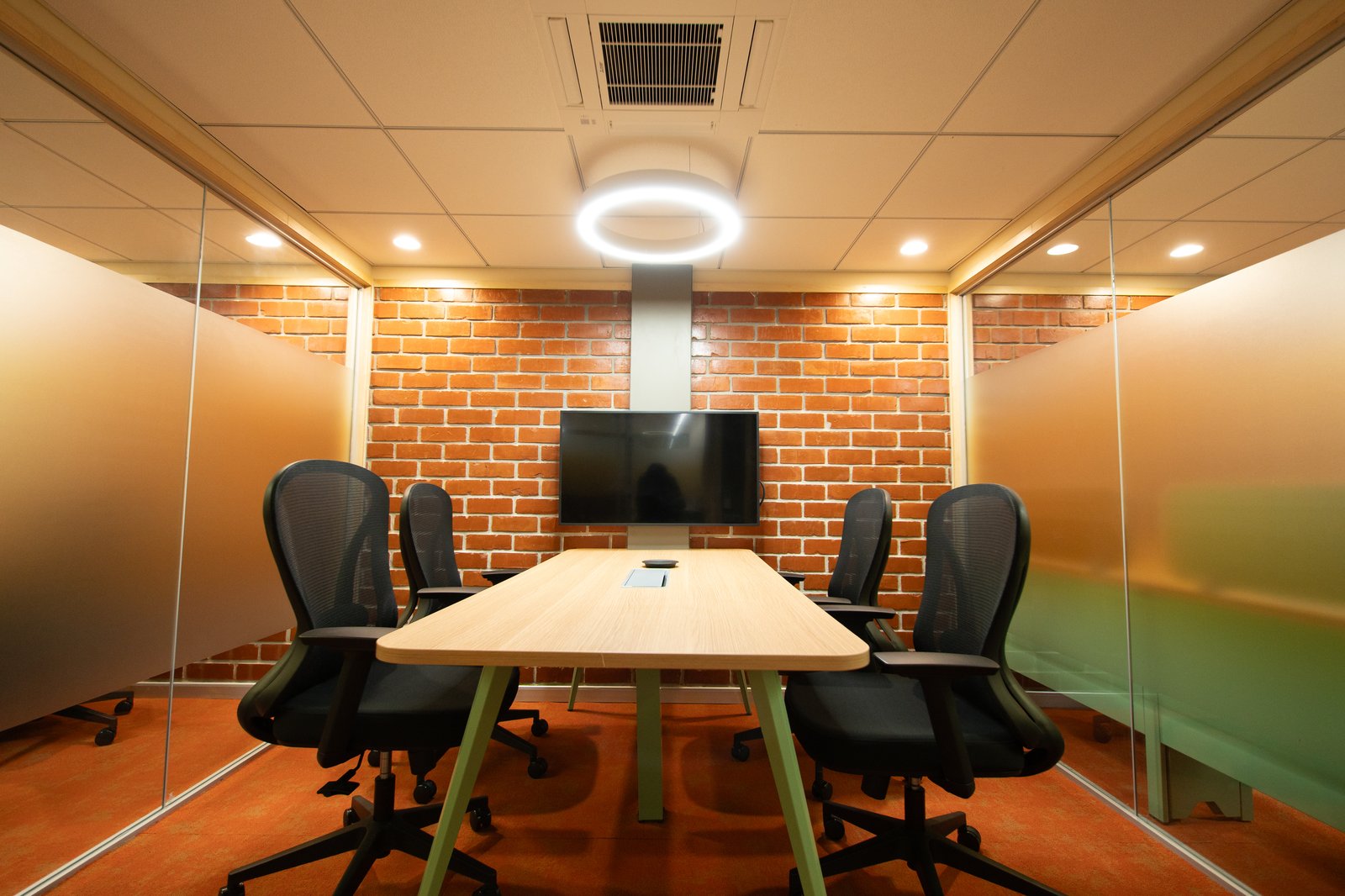
The test: visit during peak hours, between 10am and 12pm on a weekday. If you cannot hold a low-volume conversation without straining, the space will erode your team's focus over time.
2. Spatial Flexibility That Matches How Teams Actually Grow
A team of 8 today may be 14 in six months. The contract structure of your workspace should reflect that reality.
Most small teams in Kolkata make one of two mistakes: they sign a long-term lease too early, locking in square footage they cannot use, or they stay month-to-month in a hot-desk arrangement that cannot accommodate the collaborative intensity of a scaling team. Neither serves you well.
What to look for in contract terms:
away's Kolkata offering is built around exactly this kind of intentional flexibility. Teams can access dedicated configurations without the rigidity of a conventional managed office. Or the chaos of a shared hot-desk floor.
3. The Design Philosophy Behind the Space
Design communicates what a space believes work should feel like.
There is a specific kind of coworking space. Common in Kolkata's Salt Lake and central business districts. That signals its quality through the photograph: a dramatic staircase, a living wall, industrial pendant lights. These spaces are optimised for the pitch deck, not for the person sitting in the chair at 2pm trying to think through a difficult problem.
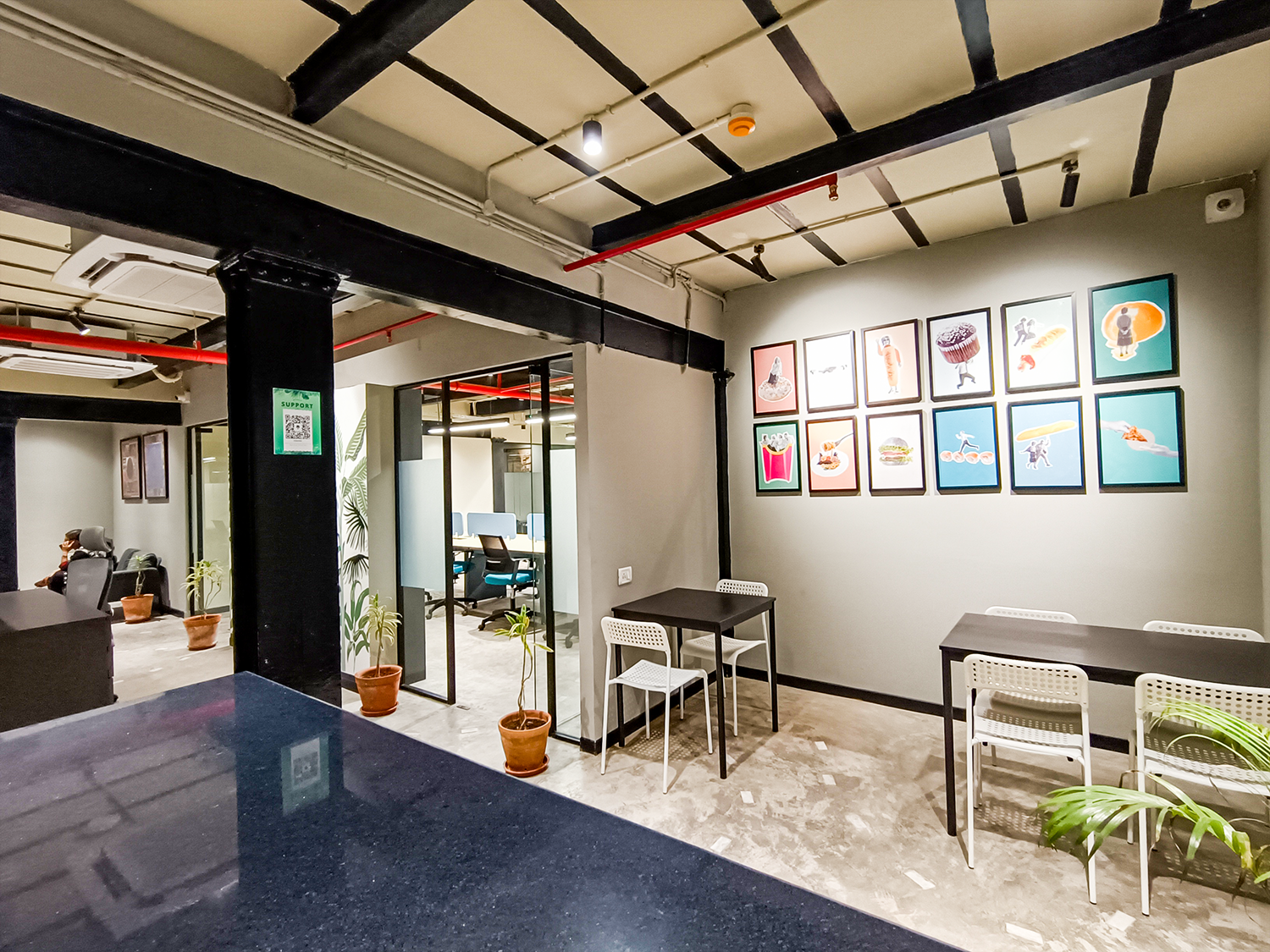
Wellness-forward design is different. It organises spatial decisions around natural light, acoustic comfort, visual calm, and human-paced rhythm. Plants are not decoration. They are part of a considered approach to biophilic design. Stillness Rooms are not a luxury feature. They are the recognition that restorative space is as productive as desk time.
The coworking spaces that will matter most to high-performing small teams are not the ones with the most amenities. They are the ones with the most coherent philosophy. Where every design decision has a reason, and that reason is the quality of work it enables.
When you visit a prospective space, walk past the reception area and sit somewhere in the middle of the working floor for ten minutes. Notice how the light falls, how the sound behaves, whether the air circulation is noticeable. These are not aesthetic preferences. They are direct inputs into cognitive state.
4. Community Quality, Not Community Programming
The networking promise of most coworking spaces is largely broken for small, serious teams.
Founders and operators in Kolkata are not looking for a badge-and-lanyard mixer. What they actually want is incidental proximity to other people doing interesting work. The conversation that begins over coffee, the collaborator found sideways. That kind of community cannot be manufactured through forced programming. But it can be made more or less likely by the physical and social design of the space.
Ask the space operator: who else works here? Not for a member directory, but for a sense of the professional character of the community. A space that cannot describe its members coherently has not thought about community at all.
Away's events programming is designed around this principle: low-pressure, high-quality encounters that create conditions for genuine connection without manufacturing it.
What Kolkata Teams Get Wrong When Choosing
The most common mistake is optimising for commute and cost, and ignoring environment entirely.
Proximity to a metro station matters. Price per seat matters. But these are threshold criteria, not differentiating ones. Once a space meets the basic access and budget requirements, the decision should be made entirely on the quality of the cognitive environment. A team saving ₹5,000 per month on workspace costs but losing 45 minutes of productive thinking per person per day is making a poor trade.
The second mistake is evaluating a space only through a tour. Spaces are always shown at their best. Cleaned, staged, and with a confident sales executive pointing at the coffee machine. The real test is an unannounced visit, or at minimum a day pass before committing. Away's Book on Demand option exists precisely for this reason: you can experience the space on a real working day before making a longer commitment.
Global coworking users reached an estimated 5.5 to 6 million in 2025. The majority of them did not choose their space on the basis of a careful framework. They chose on proximity, price, and the photograph. That is why most of them are working in environments that extract attention rather than enable it.
The Away Approach: Built for the Work That Remains
Away is not competing with every coworking space in Kolkata. It is built for a specific kind of team doing a specific kind of work.
That work is judgment-heavy. It involves decisions that cannot be delegated to a system, directions that require taste to set, and strategies that require genuine clarity to execute. The coordination layer. Scheduling, repetitive task management, routine communication. Has largely been absorbed by tools. What remains is the human work: the call that requires full presence, the product decision that requires a clear head, the client conversation that requires an environment your team is proud to be seen in.
Away's Kolkata space is designed around this premise. Wellness-forward design is not a spa layer bolted onto a desk. It is the baseline expectation that natural light, acoustic treatment, and spatial calm are features of a serious workspace, not upgrades. The Yoga at Away programme reflects the same logic: restoration is not separate from productivity. It is what makes sustained, high-quality thinking possible.
For teams between 5 and 20 people. The exact range where culture is being built and decisions have outsized consequences. The environment is not a backdrop. It is a variable in every outcome.
The office of the future will not look like WeWork's past. It will look more like a well-run boutique hotel lobby that takes work seriously. Kolkata's best teams are already choosing accordingly.
Your team thinks better in the right room. Find yours.
Experience Away Kolkata on a real working day before you commit. No tour, no pitch, just the space.
Frequently Asked Questions
How do I choose the right coworking space in Kolkata for a small team?
Start with the nature of your work, not the number of seats. Evaluate acoustic design, spatial flexibility, natural light, and contract terms before comparing price. Visit during peak working hours. Not during a scheduled tour. To assess the real cognitive environment. For teams of 5, 20 doing judgment-heavy work, the quality of the space directly affects the quality of decisions made inside it.
What is a fair price range for coworking seats in Kolkata for a dedicated team?
Pricing in Kolkata varies significantly by location, configuration, and the quality of the space. Dedicated desks in professionally managed spaces typically cost more than hot-desk arrangements but offer acoustic separation and the ability to leave equipment overnight. For teams of 5, 20, a private team room or managed floor configuration often provides better value than paying for individual dedicated seats across multiple memberships. Always compare total cost including meeting room access and visitor hosting. Not seat price alone.
What is the difference between a coworking space and a managed office in Kolkata?
A coworking space typically offers shared infrastructure. Desks, meeting rooms, and common areas. Used by multiple independent teams. A managed office gives your team a fully private, branded floor or suite within a managed building, with dedicated infrastructure and greater control over the environment. Away offers both models. The managed office is suited to teams of 15 and above that need a dedicated presence and a consistent client-facing environment. Smaller teams often begin on flexible coworking terms and transition as they scale.
Which areas of Kolkata are best for coworking?
The choice of area depends on your team's commute patterns and client base. Salt Lake and Rajarhat attract technology and IT-adjacent teams; Park Street and the central business district suit professional services and client-facing firms. The quality of the individual space matters more than the postcode. A poorly designed space in a prime location will underperform a well-designed one slightly further out.
Can a coworking space in Kolkata accommodate a team that is growing rapidly?
Yes, but only if the contract structure is designed for it. Ask any prospective space operator specifically how you add seats mid-term, what the timeline is, and whether expansion requires renegotiating the existing agreement. Away's flexible membership model is designed to accommodate team growth without forcing a disruptive office move at the exact moment you have the least bandwidth for it.
What amenities should a small team actually prioritise in a coworking space?
Acoustic separation, reliable high-speed internet with redundancy, enclosed meeting rooms available without long booking lead times, and natural light are the baseline requirements. Wellness features. Structured movement, restorative spaces, biophilic design. Are meaningful differentiators for teams that sustain high cognitive output across long working days. Amenities like ping-pong tables and beer taps are signals about who the space is designed to impress, not who it is designed to serve.