.svg)

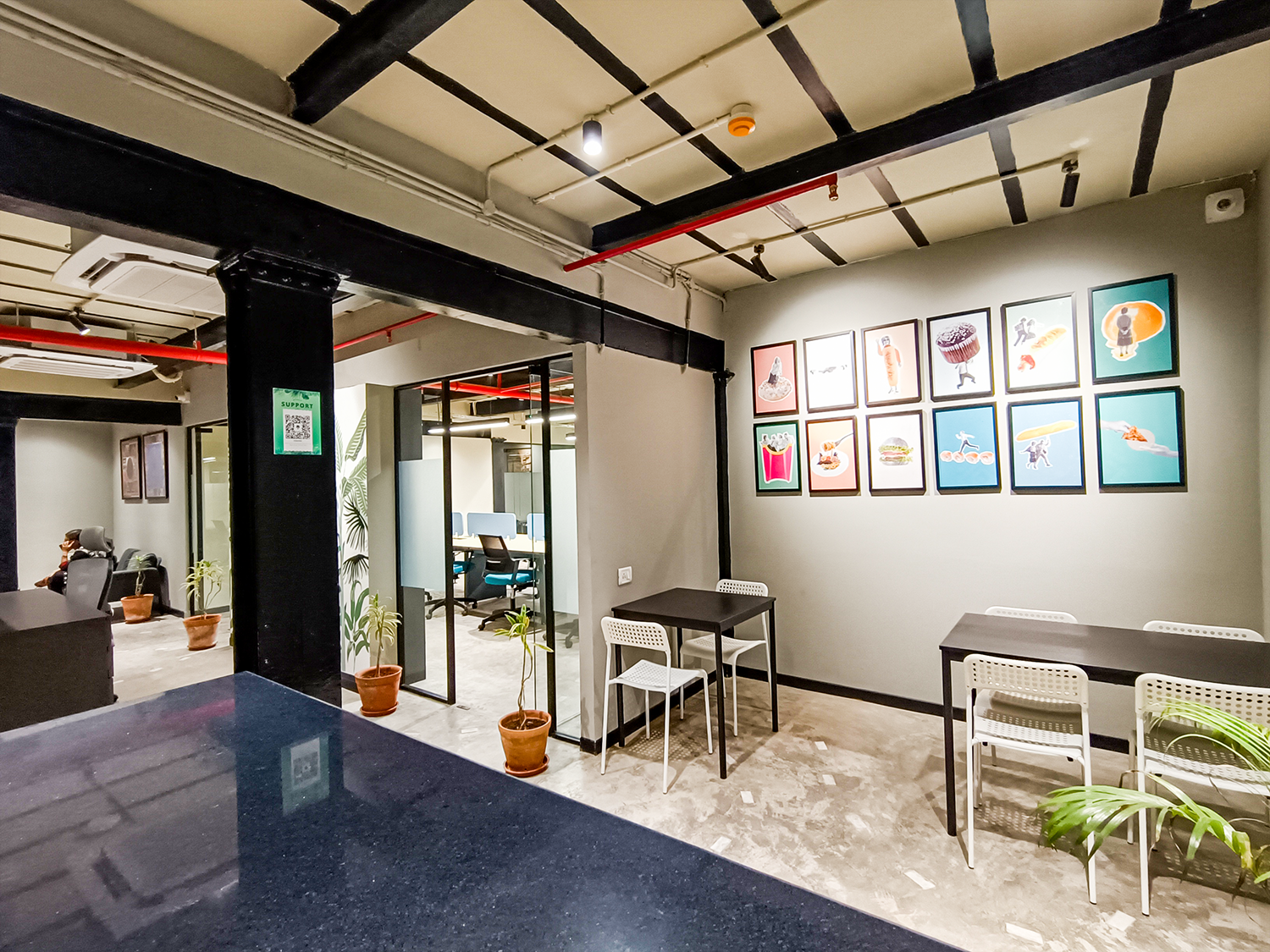
Coworking space costs in Bangalore range from ₹6,500 to upwards of ₹30,000 per seat per month. A spread wide enough to be nearly useless without knowing what actually separates the options at each price point.
A hot desk in a dense open-floor space runs ₹6,500, ₹9,000 per month in most Bangalore neighbourhoods. A dedicated desk at a mid-tier operator lands between ₹9,000, ₹14,000. Private cabins and managed offices begin around ₹15,000 per seat and scale significantly with team size and location. The real cost, however, is never just the monthly rate. It is what the environment does to the quality of your work.
This guide breaks down Bangalore's coworking pricing by format, neighbourhood, and operator type. And is specific enough to actually inform a decision.
The Pricing Landscape: What the Market Actually Looks Like
Bangalore is India's densest coworking market, and that density has not produced price clarity.
According to Mordor Intelligence, India's coworking office space market is estimated at USD 4.53 billion in 2026, growing from USD 3.98 billion in 2026. Bangalore accounts for a disproportionate share of that supply. The result is a market with many options but few that are genuinely differentiated by anything other than price and floor count.
Here is how pricing actually tiers out across format categories in Bangalore:
These numbers are consistent with aggregator benchmarks and community data from platforms like my (which cites an average of ₹8,800/seat/month) and Cofynd (dedicated desks from ₹9,999, private cabins from ₹11,999).
What those averages obscure is the quality variance within each price band. Which is where the actual decision lives.
What Neighbourhood You're In Matters More Than You Think
Location in Bangalore is not just a commute variable. It is a pricing multiplier.
Koramangala commands a premium for good reason. It sits at the intersection of Bangalore's founder ecosystem, its most walkable streets, and its most legible professional identity. Coworking spaces in Koramangala typically price 15, 25% above the city average for equivalent formats. This is where Away's Bangalore location operates. A deliberate choice, not an accidental one.
Whitefield and Electronic City offer lower per-seat costs, often ₹6,500, ₹8,500 for a dedicated desk, but those prices reflect the trade-off: longer commutes, less walkable environments, and a client base that skews toward IT services rather than early-stage founders and independent practitioners.
Indiranagar and HSR Layout sit between the two. Slightly more affordable than Koramangala, slightly more accessible than the outer corridors, but with smaller overall supply of quality coworking stock.
The Price-Quality Disconnect No Aggregator Will Tell You
Coworking aggregators rank by seat availability and commission structure. Not by whether the space is actually calibrated for consequential work.
The dominant Indian coworking product was designed between 2016 and 2022 for a specific goal: fill seats, expand fast, upsell enterprise clients. The spaces built in that era reflect those incentives. High density, loud open floors, amenity arms races involving game rooms and terrace gardens. Those are not cognitive environments. They are hospitality products with WiFi.
The cost of a coworking seat is not the monthly rate. It is the monthly rate plus the quality of judgment you can sustain in that room over 22 working days.
Founders making hiring decisions, operators running high-stakes client calls, consultants producing strategic documents. This work requires a different physical environment than coordination and email. Most Bangalore coworking spaces, regardless of price tier, were not designed with that distinction in mind.
According to Archie's 2026 coworking statistics, the global coworking market was valued at $22.01 billion in 2024 and is projected to reach $93.68 billion. That growth is real. But it is not uniform. The premium end of the market is consolidating around a different value proposition: not more amenities, but better cognitive conditions.
How Away Prices. And Why the Model Is Different
Away does not compete on the lowest per-seat rate in Bangalore. It competes on the quality of the cognitive environment and the absence of contractual coercion.
The standard coworking model in India forces a binary: commit to a 12, 24 month lease, or accept the instability of day passes and hot-desking in overcrowded floors. Neither suits the actual pattern of how founding teams and independent practitioners work. Which is variable in volume, but consistent in standards.
Away's Drift Pass model is built for this. It offers access without the lock-in that small teams cannot absorb when they are growing, shrinking, or pivoting. Value-based pricing means the structure of the contract reflects the logic of the product. Not just a discounted version of whatever an enterprise client would sign.
For teams that need dedicated infrastructure, Away's Managed Office offering combines spatial design with operational flexibility. Purpose-built for teams who want their own environment without carrying a traditional lease.
And for hiring, interviews, or small-group workshops, Talent Pods offer a purpose-designed format that no aggregated day-pass product can replicate.
What ₹9,000 Buys You: A Realistic Comparison
At ₹9,000, ₹11,000 per seat per month in Bangalore, here is what most spaces deliver:
At that price point in most Koramangala operators, you are buying a legal address and a chair. The cognitive environment is incidental.
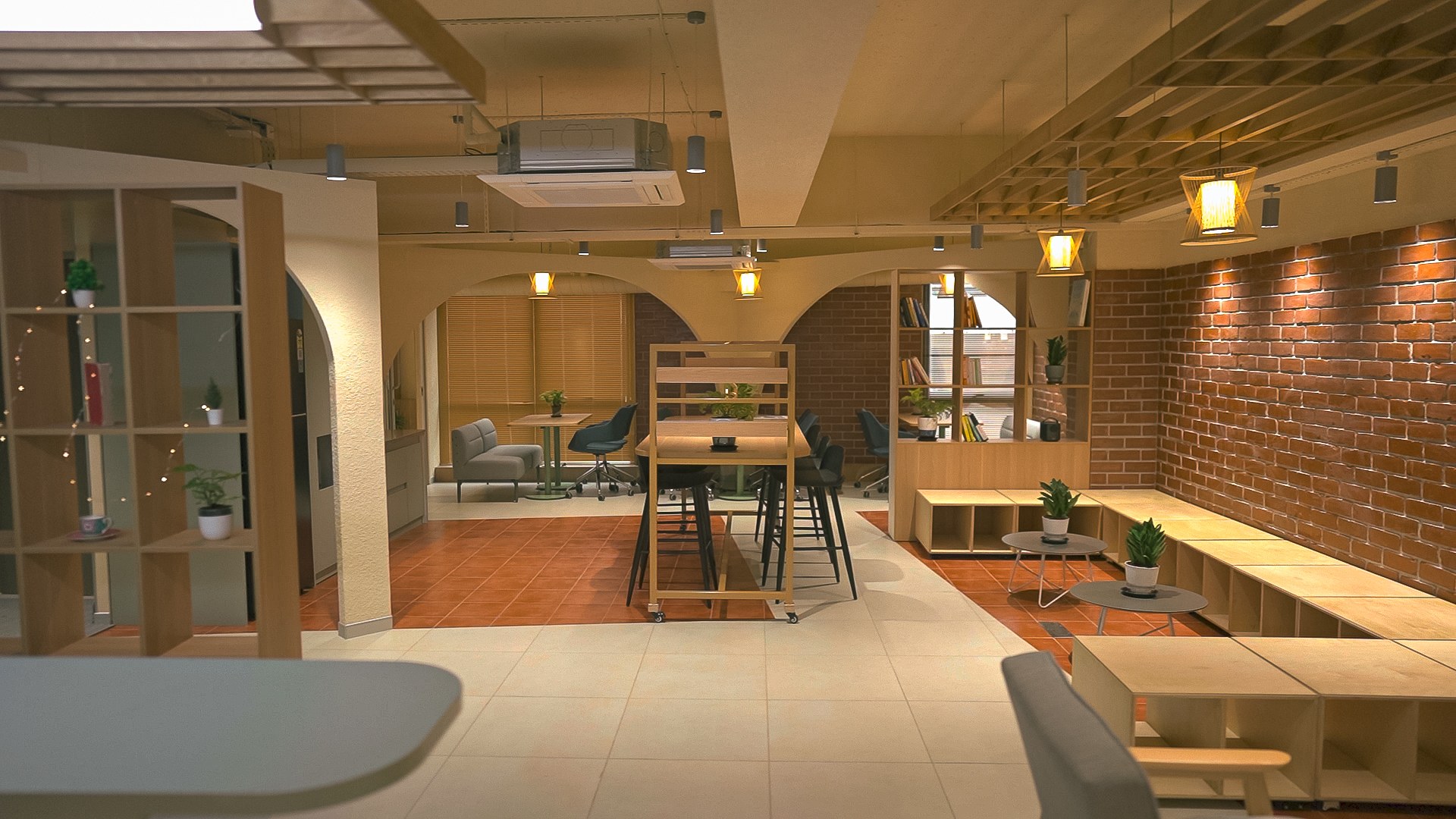
What Away builds instead: acoustics managed deliberately, natural light not as a design flourish but as a working condition, a woody and bohemian spatial quality that signals restraint rather than hustle. The difference is not decorative. It is the cumulative effect of every environmental variable on the quality of thought produced inside the room.
Drop Desk's 2026 coworking data estimates that companies save an average of $11,000, $13,000 per employee per year by using coworking spaces versus traditional leases. That is a compelling macro case. But savings relative to a traditional lease is not the relevant benchmark for a solo operator or a 4-person founding team. The relevant benchmark is whether the space actively supports or subtly degrades their highest-value work.
Booking Options: Flexible Access at Away
Away is available on demand. No long-term commitment required to experience the space.
The Book on Demand option allows access without a membership commitment. Suited for practitioners who need the environment occasionally, or those evaluating the space before committing to a Drift membership. It is the least friction, highest signal way to determine whether the environment actually suits your work.
For recurring members, Away's Koramangala location in Bangalore anchors the network. With additional locations in Vizag's Daba Gardens for those operating across cities.Work in a Room Built for Your Kind of Work Experience away's Koramangala space. No lock-in, no long-form commitment required.
Frequently Asked Questions
How much does a coworking space cost in Bangalore per month?
Hot desks run ₹6,500, ₹9,000 per month. Dedicated desks cost ₹9,000, ₹14,000. Private cabins begin around ₹14,000, ₹22,000 per seat. Managed office formats for teams scale above that depending on size and tenure. Day passes are typically ₹500, ₹1,200. Prices vary by neighbourhood, with Koramangala and Indiranagar commanding a 15, 25% premium over outer corridors like Whitefield.
Is a coworking space in Koramangala more expensive than other areas of Bangalore?
Yes. Koramangala typically prices 15, 25% above the Bangalore average for equivalent formats. The premium reflects location centrality, walkability, and the density of the founder and professional ecosystem in the neighbourhood. For knowledge workers doing judgment-heavy work, the environment and community that come with that location carry real functional value.
How does WeWork price its spaces in Bangalore?
WeWork Bangalore operates on a per-seat model with open desks typically starting above ₹10,000 per month and private offices priced significantly higher depending on team size and location. WeWork's model is designed for enterprise clients and larger teams; its spaces are optimised for density and brand recognition rather than acoustic management or design restraint. Pricing is negotiated, not published consistently, and typically requires a longer commitment horizon.
What is the cheapest coworking option in Bangalore?
Open hot-desk memberships in outer Bangalore neighbourhoods like Electronic City and Whitefield begin around ₹6,500 per month. Day passes at these spaces can be as low as ₹500. The trade-off at this price point is predictable: high-density floors, variable noise, and no continuity of environment. For work that requires sustained concentration, the cheapest option typically carries a hidden cost in cognitive overhead.
Are coworking spaces in Bangalore worth it compared to working from home?
For coordination work and email, the home office is often sufficient. For judgment-heavy work. Hiring decisions, investor conversations, strategic writing, product pivots. The environment matters more than most people consciously acknowledge. A home office does not fully separate from domestic life; most coworking spaces overcorrect with noise and density. The question is not "coworking versus home" but "which environment is actually calibrated for the work I need to do."
Can I try a Bangalore coworking space without a monthly commitment?
Yes. Away's Book on Demand option allows access to the Koramangala space without a membership or long-term commitment. Most large operators also offer day passes, though availability varies. For someone evaluating whether a space genuinely suits their work, a few on-demand visits produce far more useful signal than a brochure or a virtual tour.
.png)