.svg)

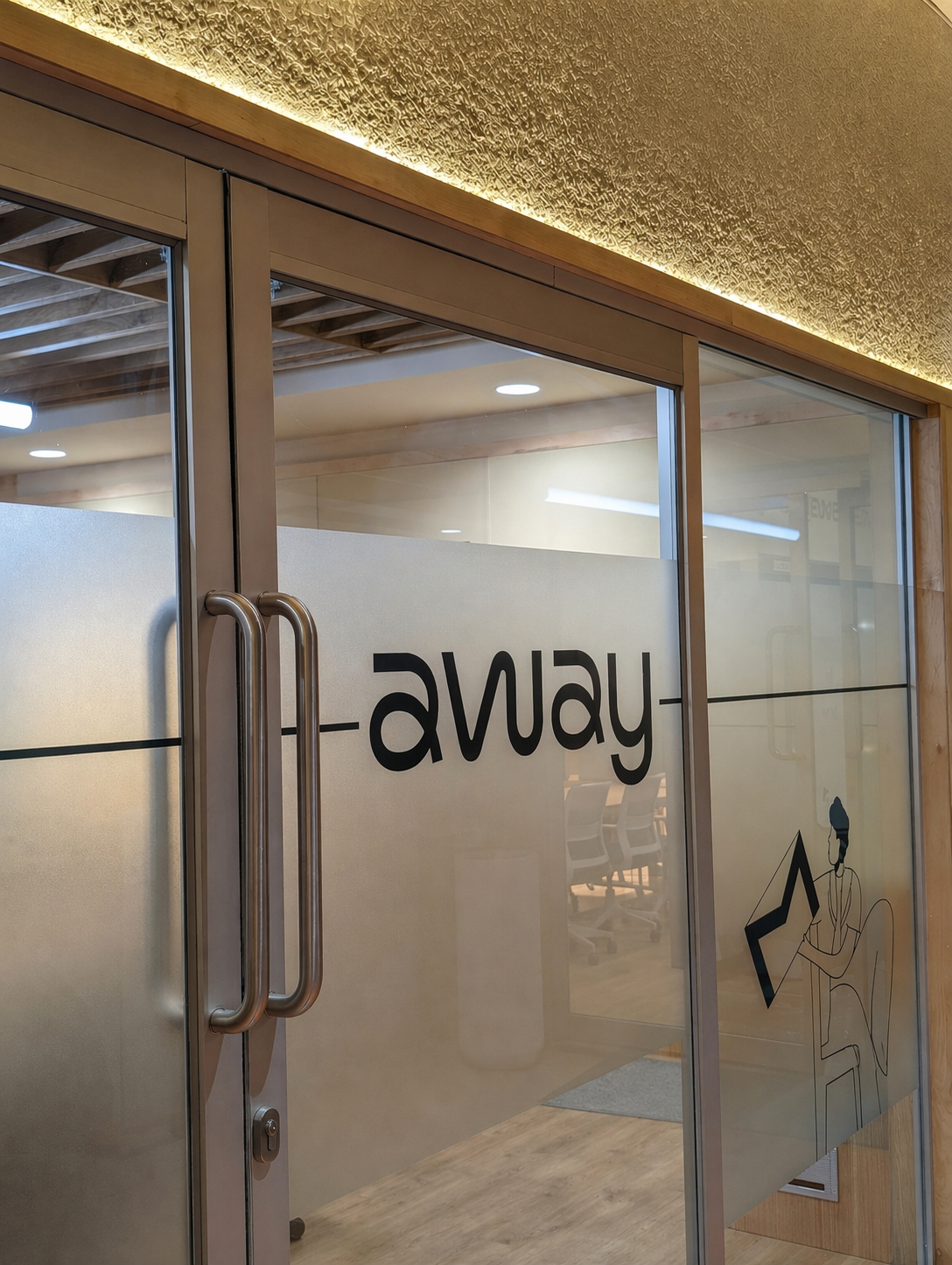
74% of coworking members report feeling more productive in a shared workspace. Yet most founders in Kolkata are paying for environments that actively undermine their best thinking.
The best coworking spaces in Kolkata for startups in 2026 are not the ones with the longest amenity lists or the lowest per-seat price. They are the ones designed around the quality of thinking. Spaces where acoustic control, natural light, and intentional design work together to support judgment work, not just presence. Away's
is built precisely on this principle: fewer distractions, sharper decisions, and a physical environment calibrated for founders who have already moved past the hustle era.
Kolkata's startup ecosystem is maturing fast. The city has moved well beyond its early-stage incubator phase, and a growing cohort of serious founders, boutique consultancies, and small creative teams now need something the market hasn't fully delivered: a workspace that matches their taste, respects their cognitive rhythm, and doesn't lock them into lease logic built for 2015.
The India coworking market is estimated at USD 4.53 billion in 2026, growing from USD 3.98 billion the previous year. But market growth tells you nothing about whether any individual space is actually good for how you work. Size is not the criterion. Design, acoustic intelligence, and membership flexibility are.
Why Most Kolkata Coworking Spaces Fail Serious Founders
The dominant model in Kolkata's coworking market optimises for two things: density and optics.
Pack more desks in, photograph the exposed-brick wall, list the amenities, compete on price. The result is spaces that look productive on Instagram and feel chaotic in practice. Open-plan floors where a sales call at the next desk contaminates your next two hours. Hot desk arrangements where you never know who you're sitting next to. Community Slack channels that generate noise, not relationships.
This is what Away calls the noise tax: the invisible, daily cost of working in an environment that fragments your attention. It's not just the distraction in the moment. It's the cognitive residue. The mental static that bleeds into your next task, your next decision, your next client call. Founders paying ₹10,000, ₹20,000 per month for a desk in a crowded shared floor are not buying productivity. They are buying the performance of it.
The physical environment is a productivity tool, not a perk. Most coworking spaces have been designed by people who don't actually understand deep work. And the founders paying for those spaces are absorbing that cost every single day.
The other failure mode is what might be called the sterile premium problem. A handful of Kolkata spaces have invested in better interiors. Glass partitions, ergonomic chairs, a proper espresso machine. But the aesthetic is corporate-generic: the visual language of a bank lobby that discovered plants. Founders who have genuine opinions about design, light, and texture are forced to work in spaces that feel borrowed from a world they've already left behind.
What to Actually Look For: The Right Criteria
Before listing any space, the evaluation framework matters more than the list itself.
The criteria that genuinely predict whether a coworking space will improve your output are specific and non-negotiable:
Apply these five criteria honestly to every space you visit. The shortlist becomes shorter very quickly.
Away Kolkata: Built for the Fourth Wave of Work
Away's Kolkata space is the only coworking option in the city explicitly designed for what comes after hustle culture.
The design brief at Away is not aesthetic. It is functional. Every spatial decision is made with one question: does this support the quality of thinking? Stillness Rooms. Away's proprietary product. Exist not as a wellness gesture but as acoustic infrastructure. When you need silence for a forty-minute deep work session, the space gives you that without apology. This is what flow-state infrastructure actually looks like in practice.
The membership model reflects how startups actually operate. Away's Drift Pass and Drift Membership are built around the reality that a three-person founding team in month six of a funding round works differently from the same team in month twelve of a product build. Flexibility is not a feature Away bolts on. It is the structural premise of how the space is sold.
The community at Away is small by design. Selective expansion is not a limitation. It is the mechanism by which genuine relationships form. Repeated proximity to the same ten thoughtful people is worth more professionally than a Slack channel with three hundred members you'll never meet for coffee.
For founders who want more than a desk and a login, Away also hosts curated events and offers yoga at Away. Not as wellness add-ons, but as part of a considered approach to what a working day should feel like. The workspace as second home is not a metaphor at Away. It is a design specification.
How Away Compares to the Kolkata Market
The Kolkata coworking market, as global industry data confirms, is growing within a market expected to reach $93.68 billion by 2035. More spaces will open. More amenity lists will lengthen. More rooftops will be photographed.
The spaces most commonly cited in Kolkata directories serve a genuine purpose. They offer accessible price points, reasonable WiFi, and functional desks. For a freelancer who needs to leave their flat three days a week, they are adequate. But adequacy is a low bar, and founders building companies that depend on the quality of their decisions need something calibrated above that bar.
The distinction is not between expensive and cheap. It is between spaces designed to fill seats and spaces designed to improve thinking. Most Kolkata options, at every price point, are the former. Away is the latter. And for a founder whose competitive advantage is judgement, taste, and direction, that distinction is not marginal. It is the entire point.
For teams that need a more permanent footprint, Away also offers managed office solutions. A natural step for startups that have outgrown hot-desk arrangements without wanting to manage a lease themselves. And for distributed teams that need a satellite presence without a full commitment, Talent Pods provide a structured, design-led solution that most Kolkata operators haven't thought to offer.
The Real Test: What Does the Space Ask of You?
Every workspace makes an implicit demand on the person inside it.
A noisy open floor asks you to perform presence. A glass-walled corporate suite asks you to look like a company. A café asks you to be unobtrusive. Most coworking spaces ask you to be grateful for the WiFi and pretend the chaos doesn't cost you anything.
Away asks something different: to work with restraint and intention. To treat your hours as a finite resource worth protecting. To exist in a space that was designed around the idea that the best founders are not the ones who work the most hours, but the ones who make the best decisions in the hours they have.
Globally, 74% of coworking members report higher productivity. But that number is an average across 42,000 spaces and 5.5 to 6 million users. The question is not whether coworking works. It is whether the specific space you choose is calibrated for the kind of work you do. For judgment work, for founders making hard calls in small rooms, the answer has to be more precise than a desk and a password.
Your Work Deserves a Space Built for It
Away Kolkata is designed for founders who have outgrown the noise and want a workspace calibrated to their actual way of working.
Frequently Asked Questions
What should startups look for in a coworking space in Kolkata?
Prioritise acoustic design over amenity length, flexible membership terms over monthly-desk pricing, and natural light over Instagram aesthetics. The most important criterion is whether the physical environment supports focused, high-quality thinking. Not whether the lobby photographs well. Startups operating on project cycles and funding timelines need spaces that match that rhythm, not 12-month leases built for a different era.
Is coworking in Kolkata affordable for early-stage startups?
Kolkata has coworking options across a wide price range. The more relevant question is total cost: a lower sticker price in a noisy, poorly designed space carries a hidden productivity cost that compound daily. A higher-quality space that protects your focus and reduces context-switching can deliver better value even at a higher monthly rate. Especially for founders whose primary asset is the quality of their decisions.
Which is the best coworking space in Kolkata for working alone peacefully?
Away Kolkata is specifically designed for this use case. Stillness Rooms provide acoustic separation for deep work sessions. The membership model is intentionally selective, keeping the environment calm rather than crowded. For founders and knowledge workers who need extended periods of uninterrupted focus, a space with genuine acoustic infrastructure. Not just a "quiet zone" sign. Is the only honest answer.
What are the top coworking spaces in India overall?
India's coworking market, estimated at USD 4.53 billion in 2026, includes large national operators and smaller design-led independents. The national operators offer scale and standardisation. Away operates in Kolkata, Bangalore (Koramangala), and Vizag. Prioritising calibration and design intentionality over footprint size. For the founder ICP that values environment quality above all else, Away's selective expansion model is a deliberate choice, not a limitation.
Can a coworking space in Kolkata support a growing startup team?
Yes. But the right structure depends on your growth stage. Drift Memberships at Away suit small founding teams that need consistency without a long-term commitment. For teams that have grown past hot-desk arrangements, Away's managed office offering provides a designed, fully managed solution without the administrative burden of a direct lease. The goal is to match the workspace model to your actual phase, not force your team into a structure built for a different kind of company.
Who are WeWork's biggest competitors in the Indian coworking market?
In India, WeWork competes with large-format operators offering extensive square footage and enterprise-level lease structures. The more interesting competitive shift is not among large operators. It is the emergence of design-led, wellness-forward independents like Away, which serve a fundamentally different ICP. Founders and small teams who have outgrown the WeWork model's corporate aesthetic and rigid commitments are increasingly seeking spaces built around intentionality rather than scale.
.png)
.jpg)