.svg)

Freelancers in Kolkata lose, on average, the first hour of every working day to their environment. Not to distraction in the abstract, but to spaces that were never designed for the kind of work they actually do.
is the strongest coworking choice for freelancers who need genuine focus, not another amenity list. The space is designed around clarity and restraint. Quieter rooms, considered light, and an environment that hands you a mental state rather than demanding you construct one. For freelancers running lean by intent, Away offers on-demand access with no lock-in and a physical environment calibrated for judgment-work, not headcount.
Why Kolkata's Freelancers Are Outgrowing the Usual Options
The coworking market in India is enormous and expanding rapidly.
Mordor Intelligence estimates India's coworking market at USD 4.53 billion in 2026, up from USD 3.98 billion in 2025. Globally, the sector is valued at over USD 20.96 billion today, with projections above USD 58 billion by 2033. Supply has followed: there are now over 42,000 coworking spaces operating worldwide. In India, most tier-1 and tier-2 cities have dozens of options within a short commute.
Abundance has not solved the actual problem.
Kolkata's freelancers. Writers, designers, developers, consultants, independent researchers. Are not short of desks. They are short of environments that understand what their work actually requires. The city's coworking landscape defaults to one of two modes: dense, buzzing open floors targeted at startup teams scaling fast, or bare-bones shared offices priced for cost-consciousness first and experience never. Neither is designed for the solo operator whose primary output is judgment, taste, and direction.
That is the gap Away was built to occupy.
What Freelancers Actually Need from a Coworking Space
Most coworking spaces are designed for the performance of work, not the doing of it.
Walk into the average shared office in Kolkata on a Tuesday morning. You will find exposed brick chosen for Instagram, a hot desk wedged between two phone calls, and a "community manager" who wants you to attend Friday networking. None of that is hostile. Most of it is simply irrelevant to a freelancer trying to edit a 4,000-word brief or write clean code for three uninterrupted hours.
What actually moves the needle for freelance knowledge workers:
The last point is worth dwelling on. Freelancers are not antisocial. They want the low-level signal of being around people who are also concentrating. What they don't want is the transactional community that most coworking operators manufacture and then market as a benefit. Being added to a WhatsApp group is not belonging. Sitting near someone who is also deep in their work, and nodding at them over coffee, is.
Premium, for a freelancer, doesn't mean more features. It means fewer wrong things. Fewer interruptions, fewer noises, fewer reasons to lose the thread of what you were thinking.
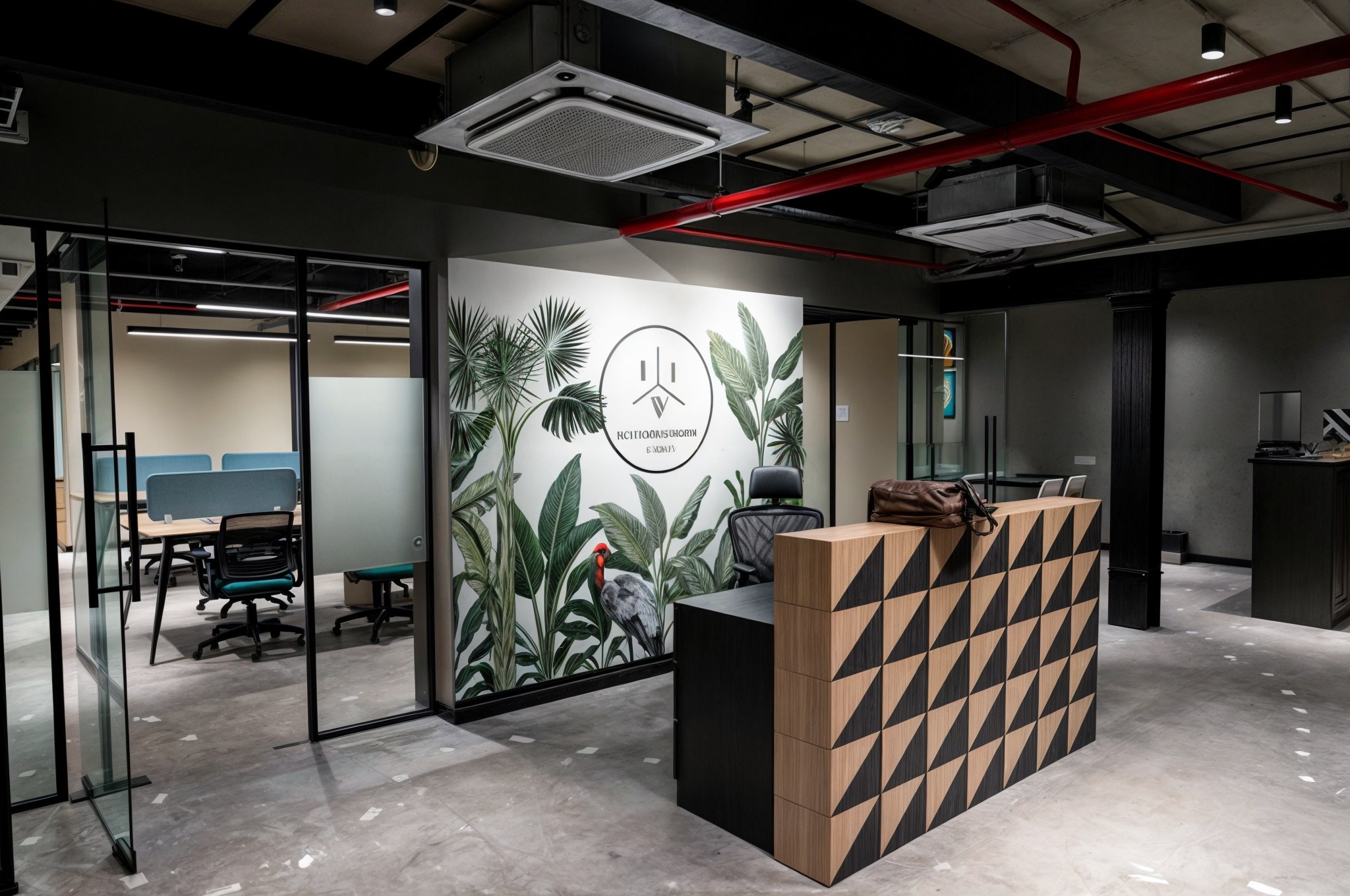
Away in Kolkata: What the Space Is Actually Built For
Away operates from a specific design thesis.
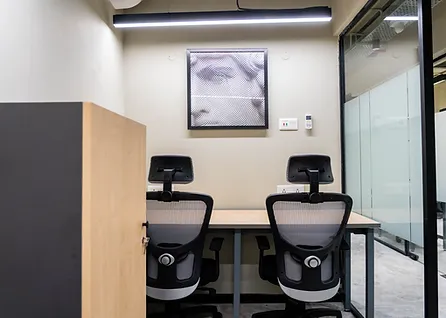
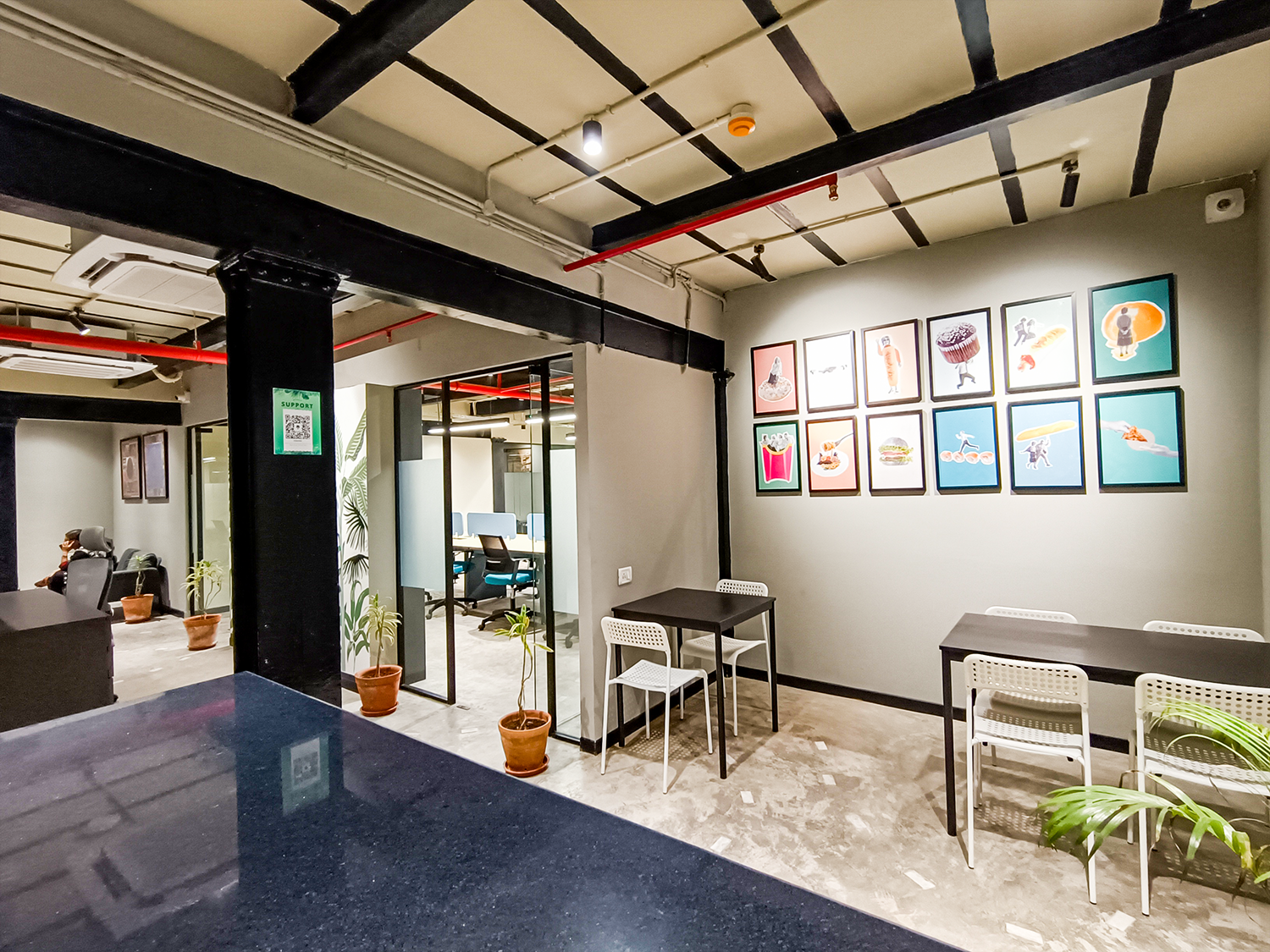
The physical environment is conceived to support clarity. Not as a marketing word, but as the functional state in which a freelancer's best work happens. Stations (open and reserved desks) and Studios (private cabins) are configured for different working modes. If you need the ambient hum of shared presence, a Station gives you that without the chaos of an overcrowded floor. If you are deep in a deliverable that requires full acoustic privacy, a Studio provides it without the overhead of leasing a dedicated office you don't need five days a week.
The Stillness Rooms are worth mentioning specifically. These are not "quiet pods" or "nap areas" bolted on as an afterthought. They are a considered part of the spatial logic. The recognition that recovery and decompression are not soft amenities but functional requirements for sustained cognitive output. A freelancer who has been writing or designing for four hours needs somewhere to reset. The Stillness Room is that place.
Away also runs yoga at their spaces. Not as a wellness programme to photograph, but as a daily structural anchor for members who want it. The difference is subtle but real: one is performed, the other is used.
For freelancers whose schedules are irregular, the Drift Membership and Book on Demand access mean you pay for what you actually use. No long-term lock-in. No bundle designed for a 20-person team when you are a team of one.
The Ambient Tax of Getting This Wrong
There is a cost that doesn't appear on any invoice.
Call it the ambient tax of the wrong environment. It is the 45 minutes you spend every morning settling yourself into a café that gets loud by 10am. The cognitive residue of the WeWork floor that smells like carpet cleaner and someone else's urgency. The home office that bleeds into the rest of life because the room was never designed to hold a boundary. These costs are invisible on a month-to-month basis. They compound across quarters and years.
For a freelancer, the compounding is asymmetric. Your output is almost entirely the product of the quality of your thinking. A 10% drag on clarity across 200 working days is not a rounding error. It is the difference between the work you are capable of and the work you actually delivered.
This is the case for taking your working conditions seriously, as a deliberate operational choice, not a lifestyle preference.
How you arrange your working conditions is itself a decision of consequence. It compounds, quietly, the same way any other operational choice does.
How Away Compares to the Alternatives
The honest comparison is more useful than the polite one.
Awfis and similar operators in Kolkata are built for density. Their model works at scale, and their pricing reflects a cost-per-seat logic that makes sense if you are optimising for square footage efficiency. For a freelancer, that logic produces exactly the wrong environment: high occupancy, high ambient noise, and an aesthetic that signals "enterprise waiting room" rather than "place where I do my best work." Awfis is a capable solution for a growing startup that needs 15 desks and a meeting room. It is not designed for you.
Cafés remain popular for a reason. They are accessible, familiar, and provide just enough ambient stimulus to feel productive without being isolating. But the acoustic unpredictability after noon, the guilt of occupying a table for four hours on one coffee, and the complete absence of any ergonomic consideration make them a short-term workaround, not a working condition. They are where freelancers work when they have no better option.
Away is not selling you a cheaper desk. It is selling you a working condition. The physical arrangement under which your judgment and output are most likely to be at their best. That is a different product category, even if it occupies some of the same real estate.
If you are in Kolkata and want to experience it directly, Away's Kolkata location offers on-demand access so you can assess whether the environment actually works for you before committing to anything. That is the correct way to evaluate a workspace: use it for real work, not a tour.
Work from a space built for the work you actually do.
Away in Kolkata offers on-demand access, Drift Memberships, and private Studios for freelancers who are done compromising on their working conditions.
Frequently Asked Questions
How much does a coworking space cost per day in Kolkata?
Day passes at coworking spaces in Kolkata typically range from around ₹400 to ₹1,500 depending on the operator and the type of access. Hot desk options at volume operators like Awfis or listed aggregators tend to be at the lower end; design-led spaces with private cabin access or Stillness Rooms sit higher. Away's on-demand access is structured around what you actually use, without requiring a monthly commitment or a bundle designed for teams.
What are the disadvantages of coworking spaces for freelancers?
The most common complaints are noise, unpredictable acoustic conditions, and a social atmosphere that feels performative rather than genuinely conducive to focus. Many coworking spaces are optimised for visible activity. Busy floors look successful. Rather than for the quieter, deeper work that freelancers typically do. The other structural issue is pricing: most plans are designed for full-time team members, which makes them poor value for a freelancer working three or four days a week. Away's Drift Membership addresses both problems directly.
Who is WeWork's biggest competitor in India?
In volume terms, Awfis is the largest coworking operator in India by number of centres. Other significant players include Smartworks, IndiQube, and 91Springboard. However, for freelancers specifically, the more relevant question is not who has the most locations but whose product is actually designed for focused solo work. Most large operators are built for enterprise teams, not individual knowledge workers.
Why do coworking spaces fail to work for serious freelancers?
Most coworking spaces fail freelancers because they are designed around the wrong user. The density model. Pack in as many desks as possible. Optimises for revenue per square foot, not for cognitive output per hour. The result is high ambient noise, an aesthetic that signals hustle over focus, and pricing structures that assume a 20-day-a-month presence. Freelancers doing high-value knowledge work need acoustic control, flexible access, and an environment that defaults to quiet rather than requiring you to find a quiet corner. These are design decisions, not add-ons.
Is Away suitable for freelancers who don't want a fixed monthly plan?
Yes. Away's Book on Demand model and Drift Membership are structured specifically for people who work on irregular schedules or who don't need a dedicated desk every day. There is no lock-in. You access the space when your work requires it, rather than paying for a monthly plan that assumes a rhythm that doesn't match how you actually operate.
Does Away in Kolkata offer private cabins for freelancers who need full focus?
Yes. Away's Studios are private cabin options for members who need complete acoustic separation. For long writing sessions, sensitive client calls, or work that requires the absence of ambient distraction. They sit alongside Stations, which are open or reserved desks for freelancers who want the presence of others without the noise of a dense floor. You can move between modes depending on what the day requires.
.jpg)