.svg)

A monthly coworking membership in Bangalore costs anywhere between ₹7,000 and ₹25,000. Yet most members report the same complaint: they can't actually think clearly in the space they're paying for.
Monthly coworking memberships in Bangalore typically range from ₹7,000 for a hot desk to ₹20,000 or more for a dedicated desk in a premium space. The price, however, rarely reflects what you actually get: most memberships sell you a seat, not an environment. Away's monthly membership at Koramangala is designed around sustained, deep work. Quieter by design, with no forced social programming and no open-plan noise tax.
What a Monthly Membership Actually Buys You
The price list is the easy part.
Dedicated desk memberships across Bangalore start at roughly ₹7,000 per month on aggregator platforms like Cofynd, with premium operators quoting ₹12,000 to ₹20,000 and above. Day passes, if you prefer flexibility, have risen globally: Archie's 2026 coworking data places the average day pass at $33 internationally, a figure that broadly mirrors the ₹2,500 to ₹3,500 range visible in Bangalore's mid-tier market.
What that price doesn't tell you: whether the space is designed for cognitive work or for the appearance of it.
Standard coworking in Bangalore optimises for density. The economics of the model demand it. More members per square foot means better unit economics. And more members means more noise, more social signalling, more of what Away calls the ambient performance tax. You're not just renting a desk. You're renting a role in a visual narrative of startup hustle, whether you want it or not.
The Real Cost of the Wrong Environment
Environment is a cognitive input, not a backdrop.
Global coworking membership reached an estimated 5.5 to 6 million users in 2025, and the model is clearly mature. But maturity hasn't resolved the core design tension: coworking spaces were built for collaboration and community, and then sold to people doing solo, judgment-heavy work that requires sustained concentration.
Founders writing investor memos. Consultants building client strategy decks. Designers working through complex visual systems. None of this work benefits from an open-plan café environment with a barista calling out orders and a ping-pong table in eyeshot.
The disadvantages of coworking that show up in honest reviews aren't about price or amenities. They're about noise, interruption, and the low-grade social pressure to look engaged. A monthly membership at the wrong space amplifies these problems by commitment.
Physical space is cognitive infrastructure. The way light reaches a desk, whether walls absorb sound, whether the air smells clean. These are not aesthetic preferences. They determine what kind of thinking the space permits.
How Away's Monthly Membership Is Structured Differently
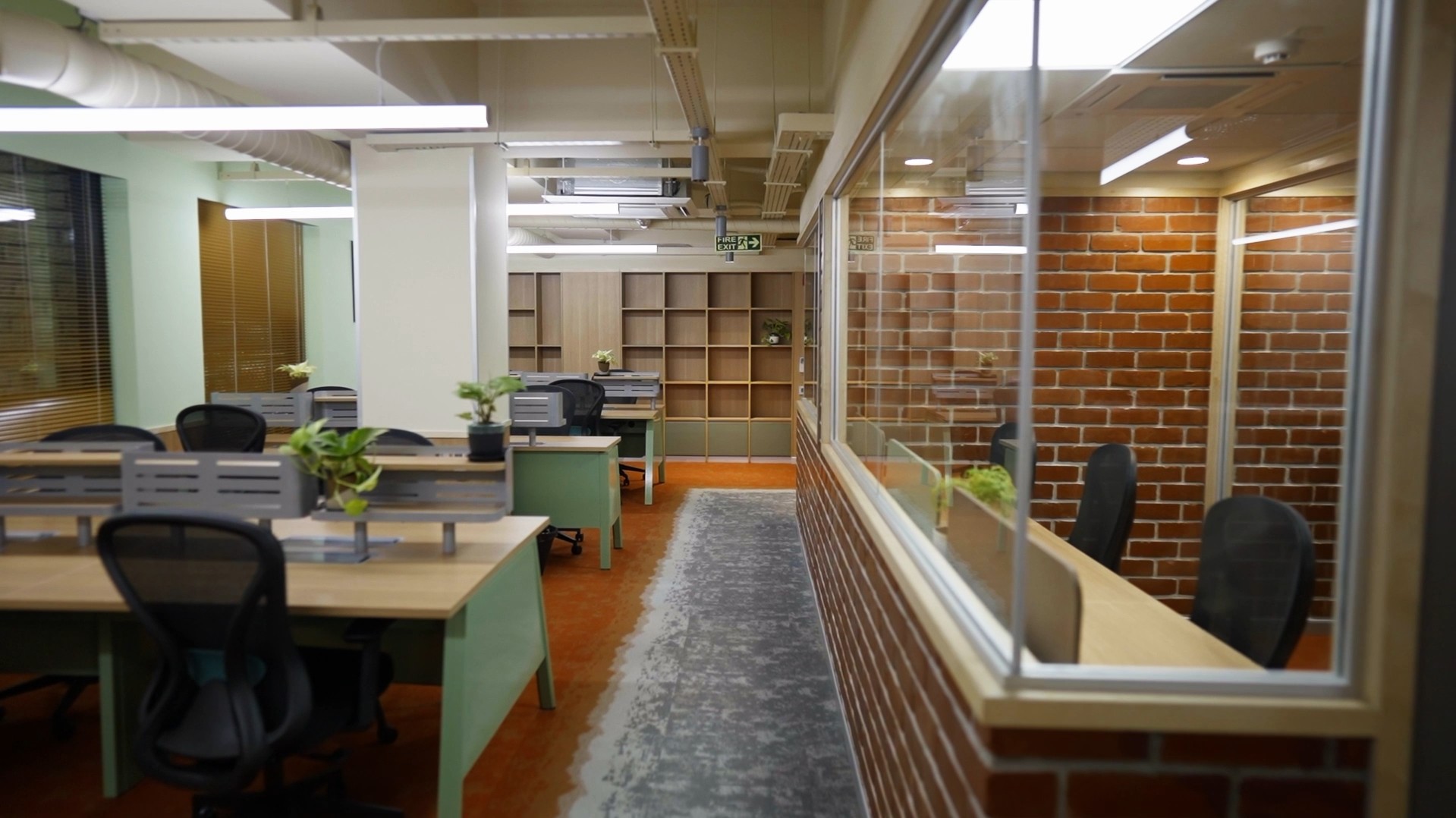
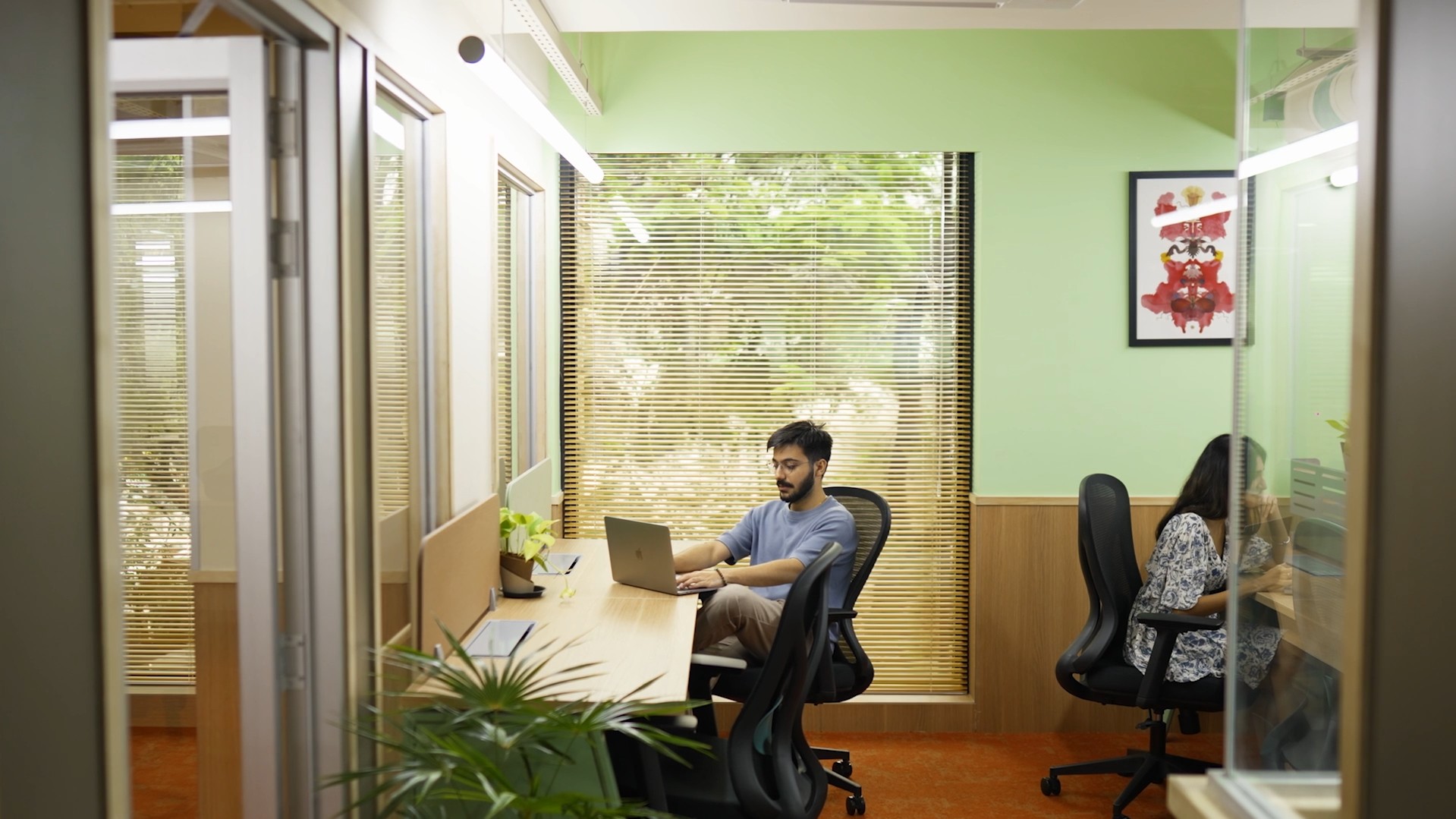
Away's Koramangala location is built on a philosophy of environmental restraint.
This means deliberate subtractions, not additions. Fewer members per floor. Quieter zones that function as genuine acoustic relief, not a compromise between two loud areas. No growth-hacking events. No mandatory community programming. The space is designed so that members can arrive, settle, and work without negotiating a social landscape first.
Away's Bangalore workspace in Koramangala serves the ICP that the industry has consistently misunderstood: solo founders, small consultancies, and remote professionals who need ambient human presence. The feeling of working alongside serious people. Without the social obligation that most coworking operators build into that experience.
The membership structure supports this. Away's Drift option provides flexible access for those whose weeks are irregular. The monthly membership provides a fixed base, a real address for GST and client meetings, and the contract terms that early-stage teams actually need: no 24-month lock-ins, no punishing security deposits, no fit-out costs absorbed by the member.
What ₹7,000 vs ₹15,000 vs ₹20,000 Actually Gets You in Bangalore
Price tiers in Bangalore's coworking market correspond roughly to three different product philosophies.
The question worth asking at any price point is not "what amenities are included?" but "what does the space subtract?" A well-designed monthly membership removes friction, removes noise, removes the need to manage your environment before you can use it.
Monthly Membership vs. Flexible Access: Which Suits Your Work Pattern?
For most judgment-heavy workers in Bangalore, the answer is not binary.
A monthly membership makes sense when you need a consistent address, a fixed cognitive anchor point, and a space you can habituate to. Where the routine itself reduces decision fatigue. If you know you'll work from the same location four or more days per week, the per-day economics of a monthly membership are almost always better than repeated day passes. At an average day pass cost of ₹2,500 to ₹3,500 in premium Bangalore spaces, four days a week for four weeks approaches ₹40,000 to ₹56,000. Against a dedicated desk monthly at ₹15,000 to ₹20,000.
For weeks with irregular rhythms. Travel, client visits, fieldwork. Away's on-demand booking through Drift provides access without locking in a commitment that doesn't match the month.
Small teams, especially those between two and fifteen people, often benefit from a different structure entirely. Away's Talent Pods are built specifically for this: a team-scale environment with the legitimacy of a real office, without the lease terms that can survive a pivot.
The fourth wave of work is primarily a quality problem. Remote work solved location. Coworking solved cost. Neither has seriously solved the environmental conditions that judgment-heavy work actually requires.
What to Look for Before Signing a Monthly Membership
Most people sign a coworking membership after a tour on a quiet Tuesday morning.
The space looks calm. The coffee is good. The community manager is warm. None of this tells you what the space sounds like at 11:30 AM on a Thursday when every member is on a call simultaneously.
Before committing to a monthly membership in Bangalore, consider these criteria honestly:
The Away philosophy answers all five of these with a design decision rather than a policy promise. The environment is built so that the answers don't depend on a community manager's diligence or a signage system nobody respects.
Your Calm, Focused Base in Koramangala
Monthly memberships designed for serious work. No lock-in anxiety, no noise tax, no performance pressure.
Frequently Asked Questions
How much does a monthly coworking membership cost in Bangalore?
Monthly coworking memberships in Bangalore range from approximately ₹6,999 for a basic hot desk at volume operators to ₹20,000 and above for dedicated desks in design-led or premium spaces. Private cabins and team-scale arrangements are priced higher depending on team size and configuration. The price range is wide because the product is wide. A hot desk in a crowded space and a dedicated seat in a curated environment are not the same product, regardless of how both are listed.
What are the main disadvantages of coworking spaces?
The most consistently reported disadvantages are noise, lack of genuine privacy, and the social performance pressure inherent in open-plan environments. These are design problems, not policy problems. They stem from coworking's original model, which optimised for community energy and density rather than cognitive quality. Acoustic disruption and visual distraction are the practical consequences. A secondary disadvantage is contract inflexibility at the lower end of the market: some operators still require three to twelve-month commitments for dedicated desks, which removes the flexibility that made coworking attractive in the first place.
How much does a coworking space cost per day in Bangalore?
Day passes in Bangalore's coworking market typically range from ₹500 to ₹3,500 depending on the operator and the type of access offered. Basic shared desks in volume spaces sit at the lower end. Premium or design-led spaces with genuine acoustic quality, meeting room access, and a managed environment are priced in the ₹2,000 to ₹3,500 range per day. Archie's 2026 global data notes that day passes have risen to an average of $33 internationally, reflecting a broader premium shift in on-demand workspace pricing.
How much does WeWork Bangalore cost per month?
WeWork's India pricing varies by city, location, and plan type. Hot desk memberships are generally positioned at the more accessible end of the market, with dedicated desks and private offices significantly higher. WeWork's model is built around scale and brand recognition rather than environmental curation. Which means the experience across locations can vary considerably. For those specifically seeking deep-focus work conditions rather than a recognisable brand address, the per-seat cost at a curated space like Away often represents better value for the actual output quality the environment supports.
Is a monthly coworking membership worth it compared to working from home?
For solo founders, consultants, and remote professionals doing high-stakes work, the home environment typically degrades output quality through interruption, poor ergonomics, and the absence of a clear cognitive boundary between work and rest. A monthly coworking membership resolves this. But only if the space itself provides genuine environmental quality. A loud, socially pressured coworking space can replicate many of the home environment's problems in a more expensive setting. The value of a membership is proportional to how well the environment supports the specific kind of work you're doing.
Can I use a coworking space address for GST registration in Bangalore?
Yes, most dedicated desk and private office memberships at established coworking spaces in Bangalore include a legitimate business address that can be used for GST registration, business correspondence, and client-facing documentation. Hot desk memberships typically do not include this. The address is shared and not assigned to a specific member. If GST registration and a credible client-facing address are requirements, a dedicated desk or private office membership is the appropriate product tier, and it is worth confirming the specifics with the operator before signing.