.svg)

.png)
Kolkata's coworking market has grown faster than most people expected. India's flexible office sector is now estimated at USD 4.53 billion in 2026, and Kolkata is no longer a footnote in that story. The city has genuine demand. The supply, however, is uneven. And choosing badly costs you more than rent.
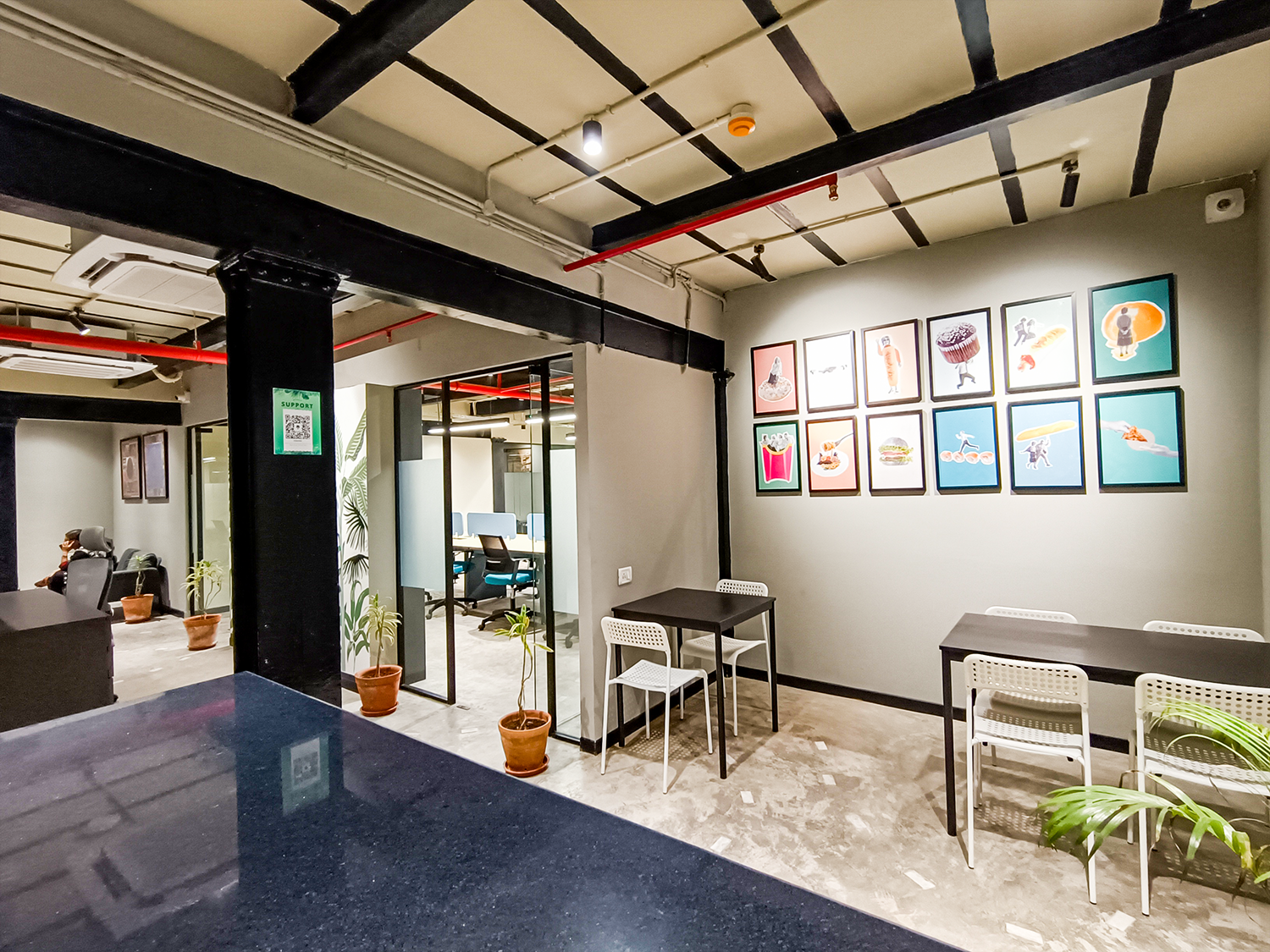
The best coworking space in Kolkata in 2025 depends on what your work actually demands. For founders, consultants, and small teams doing judgment-heavy work, Away's
is designed around cognitive quality, not desk density. Most alternatives in the city optimise for headcount and amenity lists. Away optimises for the quality of thought produced in the space.
Why Kolkata's Coworking Boom Deserves Scepticism
Growth figures don't tell the whole story.
National coworking locations expanded 15% between January 2025 and January 2026, reaching nearly 9,000 spaces across India. Kolkata has absorbed a meaningful share of that expansion. But quantity and quality are moving in opposite directions.
Most new spaces entering the market are copying a model that is already outdated. Bright open floors, hot-desking rows, community managers running speed-networking events, and amenity checklists that include a foosball table and a cold-brew tap. The underlying logic is borrowed from the WeWork era: pack people in, sell community, charge a premium for the vibe.
The problem is that the kind of work driving Kolkata's knowledge economy in 2025. Startups, distributed teams, independent consultants, creative and technical freelancers. Doesn't need more vibe. It needs more clarity.
The real bottleneck in knowledge work today is not finding a chair or a contact. It is cognitive: clarity, focus, discernment. Most coworking spaces are still solving the wrong problem.
What the Kolkata Coworking Market Actually Looks Like
The market separates into three distinct tiers, and knowing which tier you are evaluating saves considerable time.
Tier 1: Enterprise-Focused Aggregators
Operators like Awfis and Regus have a presence in Kolkata, primarily targeting mid-to-large enterprises that need compliant, managed office infrastructure across multiple cities. Their model works for that use case. For an independent founder or a 6-person team, the commercial terms (fixed headcount, longer commitments, penalty structures) assume a stability that simply does not exist at that stage.
The design language in these spaces reflects the clientele. Functional, legible, inoffensive. Not designed to produce better thinking. Designed to signal professionalism to visiting clients.
Tier 2: Listing-Aggregator Options
Platforms like Cofynd and Coworker surface a broad range of independent spaces across Salt Lake, Park Street, Ballygunge, and New Town. Quality here varies enormously. Some of these spaces are genuinely good for specific use cases (Salt Lake Sector V works well for tech teams embedded in that ecosystem). Many are converted commercial floors with branded paint, a shared printer, and aspirational Instagram content.
The aggregator model is useful for discovery. It is not useful for discernment. It treats all spaces as equivalent options in a filter grid. They are not.
Tier 3: Design-Intentional Spaces
This is the smallest tier and the hardest to find through a listing search. Spaces in this category have a genuine point of view about what work requires physically. The design is not decorative. It is functional in a deeper sense. Acoustic management, material quality, spatial rhythm, natural light as a design input rather than an afterthought. Very few spaces in Kolkata are operating at this level. Away is one of them.
What Judgment Work Actually Needs From a Space
The fourth wave of work. Where AI absorbs coordination and repetition, leaving human judgment as the scarce output. Has changed what a workspace needs to do.
Founders writing strategy documents, consultants structuring a complex client engagement, product leads making architecture decisions: these are not tasks that benefit from ambient noise, visual stimulation, and the social pressure of being seen to be busy. They require something the coworking industry has consistently undersold. The capacity to think slowly, to sit with a problem, to resist the pull toward easy answers.
That requires specific physical conditions:
Away's Kolkata workspace is built around these requirements, not around the requirements of a real estate pitch deck.
The Commitment Structure Problem Nobody Talks About
Most Kolkata coworking options will offer you a "flexible" plan. Read the fine print carefully.
True flexibility means the commercial terms match operational reality. A 6-person team that may be 10 people in four months, or 3 people if a key hire relocates, cannot absorb a 12-month fixed-headcount contract without real financial exposure. The penalty structures in standard coworking agreements are not designed for teams in motion. They are designed for teams that have already arrived.
Away's approach to this is structural, not cosmetic. The Book on Demand model allows teams to use the space with the rhythm their work actually has. Not the rhythm a fixed contract imposes. For teams that need a more permanent footprint without permanent-feeling risk, Managed Office options provide build-out and management without the traditional commercial lock-in.
Wellness That Is Built In, Not Bolted On
Every coworking space in Kolkata will mention wellness in its marketing materials. Most mean plants and good coffee.
Structural wellness looks different. It means the space itself. Its acoustic properties, its light, its pacing, its social norms. Supports recovery as well as performance. It means quiet is not something you have to manufacture with headphones. It means a mid-afternoon pause does not require leaving the building to find somewhere that doesn't feel like a productivity competition.
Away integrates Yoga at Away and curated programming directly into the membership experience. Not as a wellness add-on. As a considered part of what the workday can look like when the space allows for it.
The wellness most coworking spaces sell is decorative. The wellness that actually matters to knowledge workers is structural. Designed into the space, not scheduled into a calendar slot.
How to Actually Evaluate a Coworking Space in Kolkata
Before signing anything, apply this framework.
Most Kolkata coworking spaces will pass a tour. Fewer will pass two hours of actual work.
Work in a space designed for how you actually think.
Away's Kolkata workspace is built for founders, consultants, and small teams doing work that demands clarity.
Frequently Asked Questions
Who is WeWork's biggest competitor in the Indian coworking market?
In terms of scale, Awfis and IndiQube are the most direct competitors to WeWork in India, competing for enterprise coworking contracts across major cities. In terms of positioning, Away operates in a distinct category. Design-intentional, wellness-integrated, and oriented toward judgment-heavy knowledge work rather than bulk desk supply. The competitive framing depends on what you are optimising for: density and reach, or quality of environment and flexibility of terms.
Is owning or operating a coworking space in Kolkata profitable?
Profitability in Kolkata's coworking market depends heavily on real estate cost basis, occupancy rate, and the tier of member being served. Industry data suggests the global coworking market is heading toward 43,000 to 45,000 spaces by end of 2025, indicating significant supply expansion. In Kolkata specifically, operators who differentiate on design and community quality tend to achieve better occupancy and retention than those competing purely on price. Commodity coworking in a saturated market is a difficult commercial position.
What are the top coworking spaces in Kolkata right now?
The spaces worth serious consideration in Kolkata include Away (design-led, wellness-integrated, built for judgment work), along with established options in Salt Lake Sector V that serve tech ecosystem teams, and enterprise-grade facilities from operators like Awfis and Regus for larger teams requiring multi-city coverage. The right choice depends on your work style, team size, and how much the physical environment actually affects the quality of what you produce.
Is Innov8 owned by OYO?
Yes. OYO acquired Innov8 in 2019. Innov8 continues to operate under its own brand name, but is part of OYO's broader hospitality and workspace portfolio. This ownership structure affects the commercial and operational priorities of the spaces, which are aligned with OYO's platform economics rather than independent workspace philosophy.
How much does a coworking space in Kolkata typically cost per month?
Pricing in Kolkata varies significantly by tier and location. Basic hot-desk access at aggregator-listed spaces can start at a relatively low monthly rate, while dedicated desks and private cabins at design-quality spaces reflect the higher cost of better materials, acoustic management, and genuine service. The more useful question is not the monthly rate in isolation, but the cost per productive hour. A cheaper desk in a noisy, distracting environment is rarely the economical choice for knowledge workers.
Can a small team of 4 to 8 people use a coworking space in Kolkata without a long-term commitment?
Yes, but the terms vary considerably between operators. Away's Book on Demand model is specifically designed for teams whose headcount and cadence are in flux. Standard enterprise coworking operators typically require fixed headcount commitments and penalty-heavy exit clauses that do not suit early-stage or growth-stage teams. Read the exit terms before the amenity list.
.png)
.jpg)