.svg)


46% of coworking members globally are now women. Yet the spaces most of them land in were designed, almost without exception, around a very different kind of worker.
The best coworking spaces for women in Bangalore are those that take safety, cognitive comfort, and community seriously as design inputs. Not afterthoughts. That means controlled access, acoustically considered interiors, and a membership base of peers operating at a comparable level of autonomy and stakes. Away, located in Koramangala, is built around exactly these criteria. For founders, consultants, and operators who need a space that actively supports the quality of their thinking, not merely provides a desk.
The Real Problem with Most Coworking Spaces in Bangalore
The problem is not a shortage of options.
The global coworking market stands at US$20.96 billion, with over 42,000 spaces worldwide and 5.5 to 6 million active members. India has expanded its coworking footprint to 8,973 locations between January 2025 and January 2026, up 15% year-on-year. Bangalore alone accounts for 27.65% of India's coworking office space market share.
And yet quantity has not solved quality.
Most spaces in the city optimise for seat density and visible energy. They build open floors designed to signal momentum, fill them with a broad mix of freelancers, enterprise satellite teams, and early-career professionals, and call the result a community. For a woman founder or senior consultant trying to write a fundraising narrative or review a contract in that environment, the architecture itself becomes the obstacle.
The issue is not simply noise. It is the structural assumption baked into conventional coworking design: that visible busyness is the point, and that anyone sitting quietly. Thinking, reading, drafting. Is underutilising the space. That assumption is hostile to judgment work. It is particularly hostile to women who have already spent years navigating performative-productivity cultures in corporate offices and would prefer not to replicate them.
What "Safety" Actually Means in a Workspace Context
Safety in a coworking space is not a single feature. It is a system.
The obvious components matter: controlled building access, well-lit common areas, reliable CCTV coverage, and a professional, vetted membership base. Late-evening safety. Particularly relevant for Bangalore's many founders and consultants who work non-standard hours. Depends on the building's neighbourhood, the visibility of ground-floor entry, and whether staff are present or accessible when a member is leaving alone at 9 pm.
But there is a less discussed dimension of safety that matters just as much for this cohort: psychological safety. The specific discomfort of being the only woman in a room full of men who keep interrupting. The tax of navigating an unsolicited "networking" approach from a peer who has misread the context. The friction of working in a space where your presence is treated as unusual rather than expected.
A workspace is safe when it stops requiring effort to be in. Physical security enables presence. Psychological safety enables actual work.
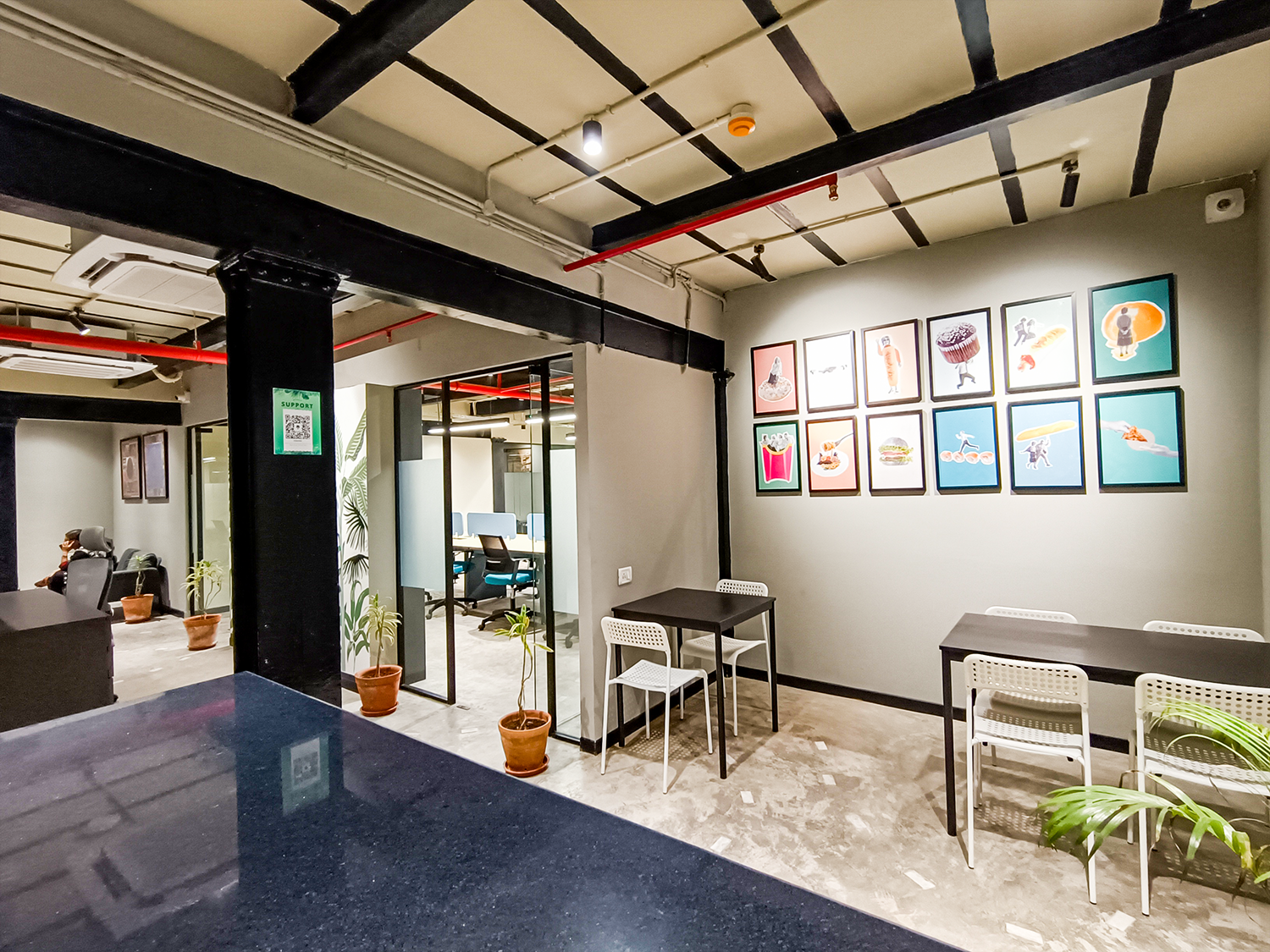
Away in Koramangala is designed around this fuller definition. The membership is built deliberately. Founders, senior consultants, and operators at a comparable stage of professional autonomy. That peer calibration matters. It changes the social texture of the room, and the social texture of the room determines whether a woman can sit down and think without a background layer of vigilance running simultaneously.
Amenities That Support the Work That Actually Matters
Most amenity checklists are window dressing.
Phone booths, standing desks, cold brew on tap. These are fine. But they are not cognitive infrastructure. The amenities that materially affect the quality of a founder's thinking on a difficult Tuesday afternoon are more specific:
- Natural light. Not skylight-adjacent. Actual, sustained daylight across the working hours of the day. Poorly lit spaces trigger fatigue earlier and degrade the quality of sustained attention.
- Acoustic design. Open-plan floors with hard surfaces amplify ambient noise. The spaces that actually work for writing, reviewing, or thinking have considered sound as a design input, not an afterthought.
- Stillness Rooms. Away's dedicated decompression spaces are not "recharge pods" or "quiet zones" in the generic sense. They are designed for the specific need to decompress between intense work sessions. A need that high-performing founders have and that almost no mainstream coworking space accommodates architecturally.
- Spatial variety. A workspace that offers only one mode of working. At a desk, in a chair, in a loud room. Is already asking you to adapt yourself to it. Away's design inverts that. The space adapts to the kind of work you are doing at any given hour.
Women who have worked in conventional offices and found them tiring in ways that go beyond the workload itself will often identify these as the actual variables. The commute was never the problem. The fluorescent lighting and the ambient social performance were.
If you need a flexible arrangement before committing fully, Away's Book on Demand option lets you experience the space on your own terms first. A practical starting point for anyone who has been disappointed by coworking spaces before.
Community That Is Actually Useful
The word "community" has been debased by overuse in coworking marketing.
What most spaces mean when they say community is: a mix of people who share a postcode and a coffee machine. Occasional events. A Slack channel that no one reads. Proximity dressed up as connection.
For a woman founder or senior operator, what community actually needs to mean is different. It is the specific value of being in a room with people who have solved adjacent problems, who understand the decisions you are currently navigating, and who can offer real input rather than general encouragement. It is the antidote to the specific loneliness of being capable and surrounded by people who cannot actually help you think.
20% of coworking members globally are freelancers or solopreneurs, and 15% are startup teams. The cohort for whom peer-level community has the most direct professional value. But they are a minority in most spaces, diluted by enterprise overflow and early-career members with entirely different needs.
Away's membership is deliberately calibrated around founders, operators, and consultants at a stage of professional autonomy where peer access matters most. That calibration is not incidental. It is the actual product. The events at Away are structured around this same principle: not networking for its own sake, but substantive exchanges between people operating at similar levels of stakes and judgment.
For members who want to integrate physical wellness into their working week, Away also offers yoga at Away. Not as a gimmick, but as a considered addition for members who understand that clear thinking and physical regulation are not separate concerns.
The Fourth Wave of Work and Why This Moment Is Different
The macro shift is worth naming plainly.
Coordination and repetition are being absorbed by automation at an accelerating pace. What remains as distinctly human. And distinctly valuable. Is judgment, taste, and direction. The founder who can read a market signal others miss. The consultant who knows which frameworks to apply and, more importantly, when to discard them. The operator who can make a consequential hiring call with incomplete information.
This is the fourth wave of work, and it is already here. It rewards depth over volume, discernment over speed, and quality of thinking over demonstrable busyness. The workspace implications are significant: the spaces built for task execution and team coordination are increasingly wrong for the people doing the work that actually matters.
For women navigating this moment, the stakes are higher. They have already absorbed the professional cost of environments that were not designed for them. The difference between a space that treats calm as infrastructure and one that treats noise as evidence of productivity is not aesthetic. It is economic. A founder making a poor decision in a distracting environment loses more than a month's membership fee could ever cost.
Away's Koramangala location exists precisely at this intersection. It is not a coworking space that added wellness features. It is a space built around the premise that the quality of your environment is the quality of your thinking. And that this has been systematically underestimated by almost everyone selling workspace in this city.
For teams that need a more permanent setup without the overhead of a traditional office, Away's Managed Office offering extends these same design principles into a fully dedicated environment.
Work in a space that was built for you.
Away in Koramangala is designed for founders, consultants, and operators who need their environment to actively support the quality of their thinking.
Get Started →Frequently Asked Questions
How much does a coworking space cost in Bangalore per day?
Day passes in Bangalore typically range from ₹400 to ₹1,200 depending on the space, location, and included amenities. Away's Book on Demand option allows flexible access without a long-term commitment. Worth considering if you want to assess whether a space genuinely suits your working style before committing to a monthly plan.
Are coworking spaces in Bangalore safe for women working late hours?
Safety for late-evening work depends on several factors: the building's access controls, the neighbourhood, staff presence during non-standard hours, and the general character of the membership base. Away is located in Koramangala, one of Bangalore's better-connected and well-lit professional neighbourhoods. The membership is vetted and professionally calibrated, which materially changes the social environment inside the space.
What should women specifically look for when choosing a coworking space in Bangalore?
Beyond the standard criteria of location and price, look for: a curated rather than open-access membership base, acoustically considered interiors (not just open-plan floors), dedicated quiet spaces for focused work, and a community that is professionally relevant to your stage of career or business. The space should trigger a different mental register when you walk in. Not simply offer a desk in a different building.
Who is the typical member at a coworking space, and does that composition matter?
Globally, 20% of coworking members are freelancers or solopreneurs, and 15% are startup teams. Most mainstream spaces have a broad, mixed-stage membership. For founders and senior consultants, that mix determines the quality of peer interaction available to them. A space where the membership is deliberately calibrated around autonomous, senior-level professionals offers a fundamentally different community experience than one open to all comers.
Why do coworking spaces fail to work for serious, focused work?
Most coworking spaces were designed to optimise for occupancy and energy, not for cognitive output. Open-plan floors, hard-surface acoustics, and socially performative environments are structurally hostile to the kind of extended, uninterrupted work that judgment-heavy roles require. The architectural assumption that visible busyness equals productivity is the root cause. And it is why many founders end up arriving early or staying late to get their real work done, which defeats the purpose of a flexible workspace entirely.
Is there a coworking space in Bangalore specifically suited to women founders rather than general freelancers?
There is no coworking space in Bangalore exclusively reserved for women. What matters more is whether the space's design philosophy, membership calibration, and community structure are suited to the specific needs of a founder or senior professional. Regardless of gender. Away in Koramangala is built around that ICP: autonomous professionals making high-stakes decisions who need an environment that supports depth of thinking, not just availability of desk space.
.png)
.jpg)