.svg)

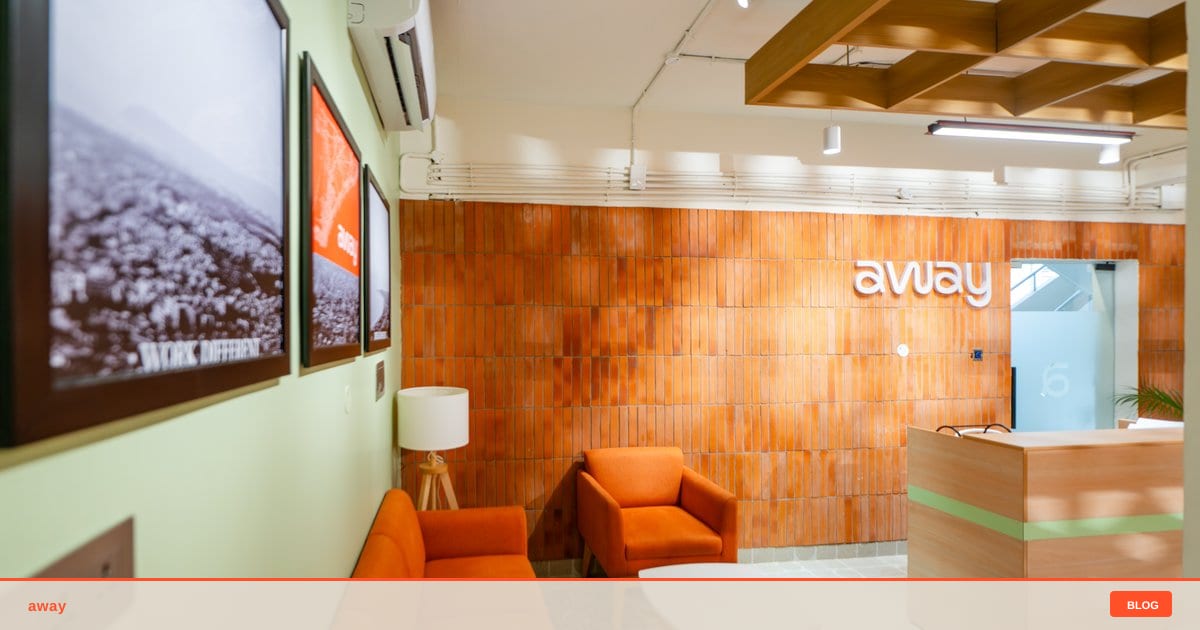
A solo founder paying ₹18,000 a month for a coworking desk in Bangalore is not buying a workspace. They are buying an environment. And most of the time, that environment is actively working against them.
A coworking space for 1 person in Bangalore is worth it. But only if the space is built for focus, not headcount. For solo founders, independent consultants, and early-stage operators, the real question is not whether to pay for a workspace, but whether the workspace they choose is designed for the kind of work they actually do. Most are not. Away in Koramangala is built specifically around that gap.
The Honest Case for Solo Coworking in Bangalore
Working alone from a café or home sounds efficient until the second week of a critical product sprint.
The cognitive cost of self-managing your environment. The noise, the interruptions, the absence of spatial separation between rest and work. Compounds quietly. You stop noticing it because you have stopped expecting anything better.
The numbers confirm the demand is real. India's coworking footprint expanded 15% between January 2025 and January 2026, reaching 8,973 locations nationally. Bengaluru alone accounted for 27.65% of India's co-working market share in 2025. Solo workers are the fastest-growing segment within that expansion.
But supply growth and quality growth are not the same thing. Most of what expanded is more of what already existed: dense floors, hot-desks, managed noise. Quantity without intention.
What Solo Work Actually Requires
The needs of one person doing serious cognitive work are specific.
They are not the needs of a ten-person team coordinating deliverables. They are not even the needs of a five-person startup doing standups. The solo knowledge worker. The freelance strategist, the seed-stage founder, the independent consultant. Needs:
- Acoustic separation that does not require noise-cancelling headphones as a workaround
- A stable, reliable address for GST registration and professional correspondence
- Access on their own schedule, not a fixed nine-to-six desk occupancy model
- A social environment that does not demand performance or manufactured networking
- Enough visual calm to sustain two or three hours of uninterrupted deep work
Most coworking operators in Bangalore optimise for none of these. They optimise for occupancy per square foot and renewal rates.
The standard coworking floor was designed by the same logic as the open-plan office. It assumed that proximity produces collaboration. What it actually produces, for solo workers, is a very expensive distraction tax.
What Coworking in Bangalore Actually Costs. And What You Are Really Paying For
Pricing for a solo desk in Bangalore ranges considerably depending on the provider and product tier.
A day pass at major operators runs between ₹500 and ₹900. Monthly hot-desk memberships at large platforms typically fall in the ₹8,000 to ₹18,000 range. Dedicated desks in premium coworking buildings can exceed ₹22,000 per month.
But the price on the invoice is not the full cost. The full cost includes:
- The productivity lost to ambient noise on a shared floor
- The time spent finding a quiet corner for sensitive calls
- The mental overhead of working in a space designed for a different kind of work
- The opportunity cost of not being somewhere that makes difficult thinking easier
When you account for all of that, a cheaper desk at a noisier space is rarely cheaper. It is just more legible on a spreadsheet.
Away's Koramangala space is designed around a different unit of value: the quality of the work hour, not just its presence. Stillness Rooms, deliberate acoustic design, and a curated social density mean the space is not fighting you while you try to think.
The Specific Failure Modes of Coworking for One Person
Solo coworking fails in predictable ways that the operators rarely acknowledge.
The noise floor problem. Open-plan coworking floors are acoustically designed for a median user. Someone doing light coordination work, taking occasional calls, moving around. They are not designed for the kind of sustained, silent, high-stakes thinking that a solo founder does before a board meeting or during a product rewrite. The result is a space that feels almost right but degrades concentration at precisely the moments it matters most.
The visibility trap. Shared floors create subtle social pressure to be seen working. Arriving early and staying late starts to feel like a professional signal. The space rewards presence, not output. Solo workers who have already escaped the corporate performance theatre often find themselves back inside a softer version of it.
The community illusion. Most operators promise community and deliver managed socialisation. Monthly events, a WhatsApp group, a curated introduction. These are gestures, not relationships. For a solo worker, genuine community. The kind that comes from repeatedly sharing a calm space with people who take their work seriously. Has real professional value. The manufactured version does not.
Away's model addresses all three. The space is smaller by design. Stillness Rooms exist as a distinct product, not a curtained corner. And the community is a function of who physically chooses the space, not who was algorithmically matched by a community manager.
When a Coworking Space for One Person Is Worth It. And When It Is Not
The calculus is straightforward once you strip away the marketing.
A coworking space for one person in Bangalore is worth it when:
- Your work requires sustained, uninterrupted cognitive effort
- You need a legitimate registered address for GST or professional correspondence
- The alternative is a home environment that makes separation between work and rest difficult
- You value proximity to a small, serious community over a large, energetic one
It is not worth it when the space you choose is optimised for volume rather than for the kind of work you actually do. You end up paying for an address and a chair in a room that is too busy to think in.
Away's Drift membership and on-demand access options are built for the solo worker who does not need a fixed daily presence. You show up when your work demands it, in an environment that is ready for you. That is the structural logic behind the Drift Pass. Intentional, unhurried access rather than a subscription to a desk you feel obligated to justify.
If you need professional infrastructure without the noise of a shared floor, Away's managed office options and on-demand booking make it possible to access a serious workspace without committing to a model that was not designed for you.
The fourth wave of work is being done by people whose output is judgment, taste, and direction. Those capacities are environmentally sensitive. You cannot exercise them reliably in a room that was designed to extract revenue per square foot.
Why Koramangala Specifically Matters
Location is not a backdrop. It is part of the product.
Away's choice of Koramangala as its Bangalore location is deliberate. Koramangala is not a generic tech park. It is a neighbourhood with character, with walkable infrastructure, with a density of independent operators and serious founders who are not at the beginning of their first startup. The ambient professional culture of a neighbourhood shapes who shows up at a space and how they behave inside it.
That matters enormously for solo workers. The quality of who you are near. Even in silence. Is part of what makes a workspace valuable. Away's Bangalore space in Koramangala is embedded in that context, not parachuted into a generic business district.
One person. One serious workspace. No compromise on the work.
Away in Koramangala is built for the solo founder, consultant, or operator who needs an environment that makes difficult work easier. Not just a desk to be seen at.
Book Your Space →Frequently Asked Questions
How much does a coworking space cost per day in Bangalore?
Day passes at major coworking operators in Bangalore typically range from ₹500 to ₹900. Hourly rates at some platforms start around ₹250. The price varies significantly based on the operator, the location, and whether the space offers a genuinely focused environment or simply a shared desk in a busy room. At Away, on-demand access is bookable directly through the app.
What are the real disadvantages of coworking for solo workers?
The most significant disadvantages are acoustic noise, social pressure to perform visibility, and a community model that rarely delivers genuine professional value. Many coworking floors are designed for teams doing coordination work, not individuals doing sustained independent thinking. For solo workers doing high-stakes cognitive work, the environment can cost more in lost focus than it saves in rent.
How much does a monthly coworking membership cost in Bangalore?
Monthly hot-desk memberships at most Bangalore coworking operators range from ₹8,000 to ₹18,000. Dedicated desks in premium buildings can exceed ₹22,000 per month. The right comparison is not just price per month but value per focused work hour. A cheaper desk in a noisier space is not always cheaper once you account for the productivity cost.
Can I use a coworking space in Bangalore for GST registration?
Yes. A coworking space with a virtual office or registered address service can be used for GST registration and professional correspondence. This is particularly valuable for solo founders and independent consultants who need a legitimate business address without committing to a full private office. Away offers this as part of its membership structure.
Why do coworking spaces fail to work for many solo professionals?
Most coworking spaces optimise for occupancy and renewal rates, not for the quality of work produced inside them. This means they fill every seat, maximise density, and create environments that reward visible presence over actual output. Solo professionals doing judgment-intensive work. Strategy, writing, design, product thinking. Find that these spaces actively interfere with the kind of sustained focus their work requires.
Is it worth getting a coworking membership as a freelancer or solo founder in Bangalore?
For most solo founders and freelancers doing cognitively demanding work, a coworking membership is worth it. Provided the space is designed for focus rather than for density. The key is matching the type of membership to actual work patterns. Fixed daily desks make sense for those who work conventional hours. On-demand or Drift-style access makes more sense for those whose schedules are project-driven and variable. Away's model in Koramangala is built specifically for the latter.
.png)
.jpg)