.svg)

Most coworking day passes under ₹500 in Bangalore cost you more than they save.
Coworking day passes in Bangalore range from ₹150 to ₹1,000 depending on the space and location. Budget options under ₹500 exist. GoFloaters lists passes from ₹249, and Awfis starts at ₹300. But the trade-off is almost always noise, crowds, and an environment that makes deep work difficult. Away's Bangalore workspace in Koramangala offers a different proposition: a day experience designed for judgment-level work, not just a seat with Wi-Fi.
Here is what nobody writing about cheap coworking passes will tell you: the price on the listing is rarely the actual cost.
The actual cost is three hours of interrupted deep work. A phone call you had to take in a stairwell. A decision you deferred because the room was too loud to think clearly. Research into coworking industry patterns shows that 87% of coworking users report improved productivity. But that figure aggregates wildly different environments. A ₹300 desk in a cafeteria-style hall is not the same product as a quiet, design-led workspace with ergonomic infrastructure and curated food. The number gets cited; the distinction gets lost.
This post breaks down exactly what you get at various price points in Bangalore, where the real trade-offs sit, and why the calculus changes depending on the kind of work you are actually trying to do.
What a Sub-₹500 Day Pass Actually Gets You in Bangalore
Budget coworking in Bangalore is a real and functional category. For a specific kind of worker doing a specific kind of work.
GoFloaters lists day passes from ₹249 across Bangalore, with options in Koramangala, Whitefield, and HSR Layout. At that price, you are typically getting a seat in a shared hall, basic Wi-Fi, and access to a pantry. Awfis starts at ₹300 and adds ergonomic furniture and a more managed environment. 91Springboard's BTM Layout option on myHQ sits at ₹500 and includes meeting room access for a limited duration.
These are not bad products. For someone doing calls, processing email, or running straightforward administrative tasks, they work fine.
The problem emerges when the nature of the work shifts. Founders writing investor briefs. Consultants structuring complex recommendations. Creative directors developing brand positioning. This kind of work. What Away calls judgment, taste, and direction. Is acutely sensitive to ambient noise, visual clutter, and the performance energy of a busy shared floor. Coworking industry data from Archie puts the median global membership at around $220 per month, but the variance in environment quality across that price spectrum is enormous. Price tells you almost nothing about whether the space can hold the work you need to do.
The Hidden Tax of Cheap Coworking
Budget spaces optimise for occupancy, not output.
To reach the 55% break-even occupancy that most coworking operators require, industry economics demand that every desk is filled as often as possible. The incentive is not your concentration. It is throughput. More members, more hot desks, more noise, more energy. This is precisely what hustle-theatre coworking was built on, and most sub-₹500 options in Bangalore are operating within that same logic.
The specific costs you absorb in these environments:
- Ambient noise that interrupts sustained thought every few minutes
- No acoustic separation between phone calls, video meetings, and focused work
- Food options that are an afterthought. Vending machines, or a pantry with instant coffee
- No space to reset between a difficult call and a difficult decision
- Community by co-location rather than curation. Whoever paid for a pass that day
None of this is a moral failing of budget operators. It is structural. You cannot build genuine quiet, genuine design coherence, and genuine community into a ₹249-per-day margin. The economics do not allow it.
The Indian knowledge worker has been sold desk space and told it is an environment. The distinction matters more now than it ever has. Because the work that AI cannot absorb is precisely the work that demands the most from the room around it.
What Away Offers Instead. And Why the Maths Changes
Away is not competing in the sub-₹500 category, and it does not pretend to.
Away's Koramangala workspace in Bangalore is built on a different thesis entirely: that the quality of your output is directly downstream of the quality of your environment. The Drift Pass. Away's flexible, low-commitment day access option. Gives you entry to a space designed from first principles for judgment-level work.
What that means concretely:
- Stillness Rooms. Dedicated acoustic spaces for deep work blocks, reset periods, or preparation before high-stakes calls. Not a "quiet corner." A designed environment with a specific purpose.
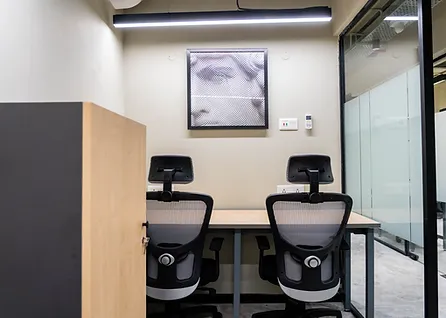
- Ergonomic Stations and Studios. The Station is a reserved open desk in a calm environment; the Studio is a private cabin for work that needs full enclosure. The distinction matters.
- Curations. Artisanal coffee, wellness food, cold-pressed juices. Not amenities bolted on. Taste applied to the fuel that runs a working day.
- Yoga at Away. structured wellness sessions built into the rhythm of the space, not a poster on the wall about work-life balance.
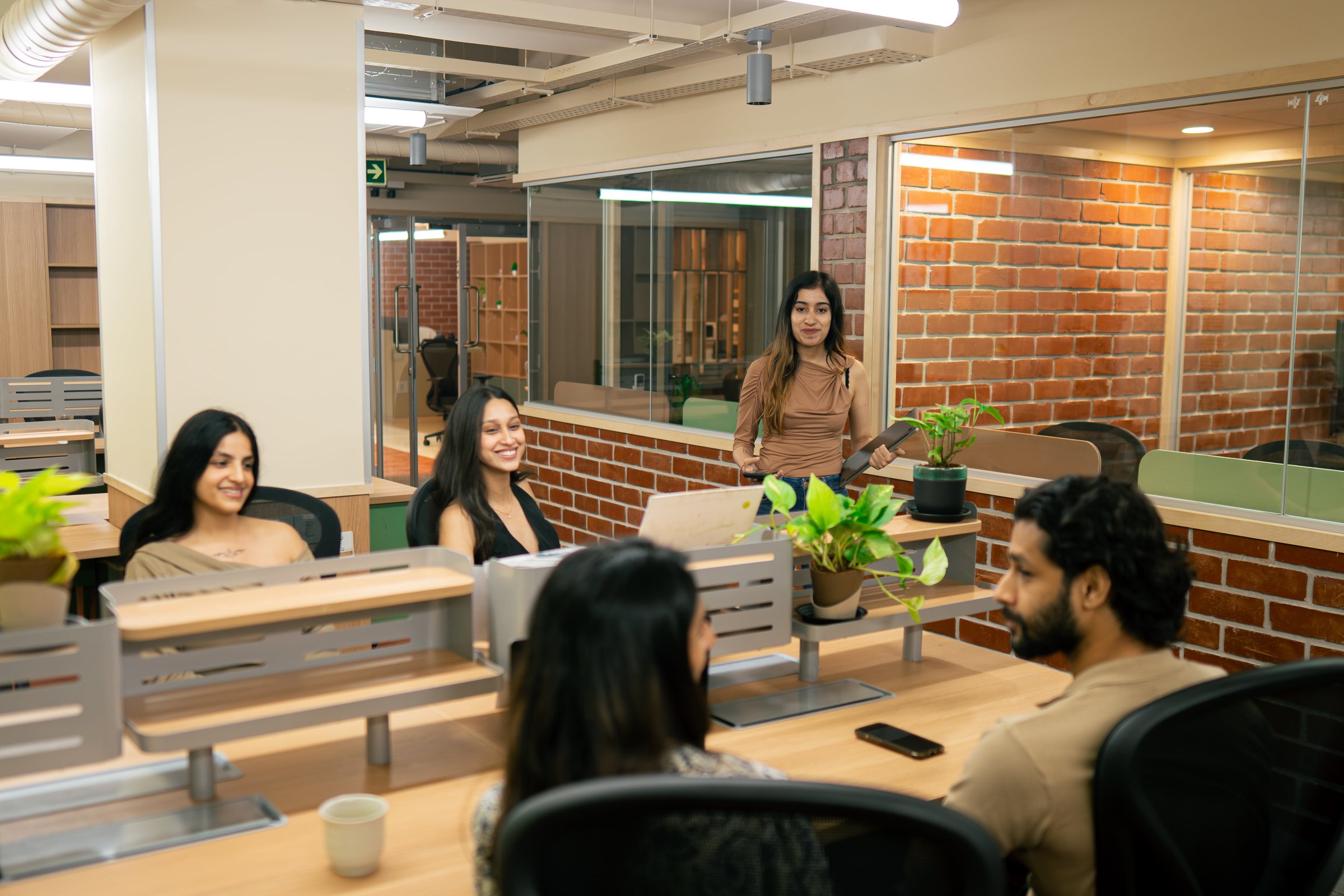
- Curated community. The people in the room are there because Away has a considered position on who belongs in the space. Co-location with intent, not co-location by default.
The Drift Pass is designed for the founder or consultant who does not need a full monthly membership but needs the full environment when they do show up. Non-linear days. A deep work block, a walk, a coffee conversation that becomes a brief. Are held by this space in a way that a ₹300 seat simply cannot replicate.
The Real Question: What Kind of Work Are You Doing?
This is the only question that actually resolves the coworking pricing debate.
If your day is structured around calls, standard deliverables, and tasks that can survive interruption. A budget day pass is entirely rational. The math works. Save the money, use the seat, get the work done.
But if your day contains even two or three hours of work that requires uninterrupted concentration, genuine cognitive load, or the kind of thinking where environment bleeds into output. The calculus inverts. The ₹300 you saved on the pass is a rounding error relative to the quality of a decision you made in the wrong room.
Away is built for that second kind of day. Not as a luxury upgrade, but as the structurally correct answer to a structural problem. The noise goes. The work stays.
Most coworking spaces were designed for the optics of productivity. Away was designed for the conditions of it. The difference is not a feature list. It is a thesis about what work actually requires.
Bangalore's Coworking Market in Context
Bangalore is not just India's largest coworking market. It is the most competitive.
Mordor Intelligence data shows Bengaluru held a 27.65% share of India's coworking market in 2025. The largest of any city. That scale means there is genuine choice at every price point. GoFloaters, Awfis, BHIVE, 91Springboard, and dozens of independent operators all have Koramangala or adjacent locations. Budget options are not hard to find.
What is hard to find is a space that has made a genuine design decision about what the work environment should feel like. Most operators in this market are competing on price and location. Away is competing on something different: the argument that where you work is not a background condition but an active variable in the quality of what you produce.
For Bangalore's growing population of founders, consultants, and creative operators. The people doing the fourth wave of work. That argument is not abstract. It is felt every time a critical piece of thinking has to be abandoned because the room made it impossible.
Experience a Day Pass Designed for Real Work
Book a Drift Pass at Away's Koramangala space and find out what a workspace built for judgment-level work actually feels like.
Get Started →Frequently Asked Questions
How much does a coworking day pass cost in Bangalore?
Day passes in Bangalore range from approximately ₹150 at basic shared spaces to ₹1,000 or more at premium managed workspaces. GoFloaters lists options from ₹249, Awfis starts around ₹300, and 91Springboard's BTM Layout option is available at ₹500 through myHQ. Away's Drift Pass is priced above the budget tier, reflecting a fundamentally different environment. Stillness Rooms, curated F&B, ergonomic Stations, and a managed community in Koramangala.
What are the disadvantages of coworking spaces?
The most significant disadvantages are noise, lack of acoustic privacy, and environments optimised for occupancy rather than output. Budget spaces in particular tend to have open-plan layouts where phone calls, video meetings, and general conversation compete with any attempt at sustained concentration. Community in most coworking spaces is incidental. Whoever bought a pass that day. Rather than curated. For knowledge workers doing high-stakes, judgment-level work, these are not minor inconveniences. They are structural obstacles.
Is a ₹500 coworking day pass worth it in Bangalore?
It depends entirely on the nature of your work that day. For calls, email, and linear task completion, a ₹300, ₹500 pass is often sufficient. For deep work. Writing, strategy, complex problem-solving. The ambient environment of a budget space often costs more in lost output than the price difference between a cheap pass and a better one. The right question is not what the pass costs, but what poor concentration is costing you.
How much does a WeWork day pass cost?
WeWork's global pricing for day passes varies by market and location. In the US, CoworkingCafe's Q2 2026 report puts day passes at around $34. Indian pricing for WeWork varies by city and availability. Check their site directly for current Bangalore rates, as they fluctuate with demand and occupancy.
What is the cheapest coworking option in Koramangala, Bangalore?
GoFloaters and myHQ aggregate the cheapest day pass options in Koramangala, with prices starting around ₹249 for basic shared spaces. BHIVE has been cited on community forums at around ₹150 for a workstation. These are functional options for straightforward work. Away is also located in Koramangala but is positioned differently. It is the option for people who need the environment, not just the address.
Does Away offer flexible day access without a monthly commitment?
Yes. Away's Drift Pass is specifically designed for non-linear access. For founders, consultants, and creative operators who need the full environment on specific days without a fixed monthly membership. You can book on demand through Away's platform. The Drift product is built around the recognition that the best work rarely follows a fixed schedule.