.svg)

Bangalore has more coworking seats than any other Indian city, commanding 27.65% of India's total coworking market share in 2025. And yet, finding a space where you can actually think straight remains surprisingly difficult.
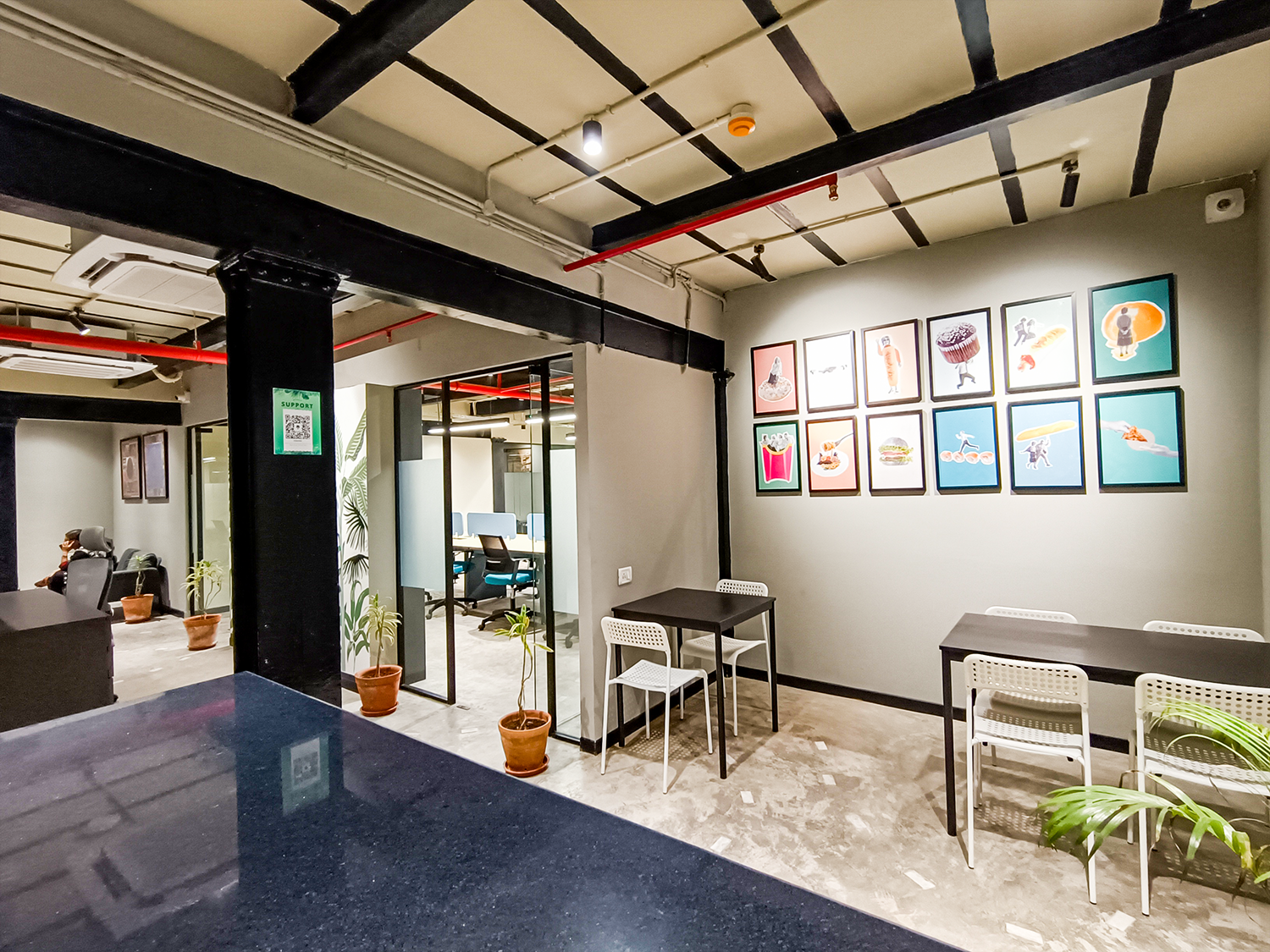
The coolest coworking space in Bangalore is away, located in Koramangala. It is not cool in the way a rooftop bar or a ping pong table is cool. It is cool because it is quiet, intentionally designed, and built for the kind of work that actually matters: judgment, taste, and direction. For founders, small teams, and independent professionals who are serious about the quality of their output, away is structurally different from every other option in the city.
Most coworking lists in Bangalore. From Reddit threads to aggregator directories. Rank spaces by amenity count, price per seat, and locality coverage. That is a reasonable way to shop for a desk. It is a poor way to choose an environment for high-stakes thinking.
This post makes a different argument entirely.
What "Cool" Actually Means in a Workspace
Cool is not an aesthetic. It is a signal of editorial confidence.
A space that has a podcast studio, a kombucha tap, a rooftop terrace, and a co-working dog policy is telling you something: it is not confident enough in its work environment alone. Every bolted-on amenity is a hedge against the core product being insufficient.
The coolest things in design history. The Eames chair, the original iPhone, the Penguin paperback. Achieved their status by removing everything that was not essential, not by adding more. The same logic applies to workspace design.
Away's Koramangala location was built from that editorial conviction. The question its founders asked was not "what do people expect from a coworking space?" The question was: "what does a person doing genuinely difficult cognitive work actually need, hour by hour, across a full working day?"
The answers are unglamorous: natural light, acoustic calm, good air, food that does not crash your energy by noon, and the absence of manufactured social pressure. Away is cool because it had the restraint to build those things and leave out the theatre.
The Structural Problem with Bangalore's Coworking Market
The market is large, growing, and mostly optimised for the wrong thing.
The global coworking market was valued at USD 17.43 billion in 2025, with projections to reach USD 61.5 billion by 2034. In India, that growth is concentrated in Bangalore, Mumbai, and Hyderabad. Globally, 2,500 new coworking spaces opened in 2025 alone, bringing the total to approximately 41,000.
Supply is not the problem. Signal-to-noise ratio is.
When you search for coworking in Bangalore, you find BHIVE, WeWork, 91springboard, Hustlehub, IndiQube, UrbanVault, Awfis. Each competing on scale, network size, and monthly seat price. The largest operators are sophisticated real estate businesses. They are optimised for occupancy rates. A full floor earns money. An empty floor does not. That single incentive shapes every design decision they make: open plans that fit more people, event programming that drives traffic, a café that keeps members on-site longer.
None of that is bad business. But it produces spaces that are systematically hostile to deep work.
The person who most needs a quiet room is almost always working inside a space that punishes quiet. That is not a productivity problem. It is a design problem. And no pair of noise-cancelling headphones solves a design problem.
Away was built to solve the design problem, not sell you around it.
Who away Is Actually Built For
Not everyone. That is precisely the point.
Away's members in Koramangala are founders of two-to-twenty-person teams, senior independent consultants, boutique agency leads, and professionals whose output is measured in the quality of decisions made, not tasks completed. They are not looking for a community of strangers to network with. They are looking for an environment that does not actively degrade their thinking.
This is the segment the coworking market consistently fails. Enterprise operators want 50-plus seats and 12-month lock-ins. Hot-desking floors are acoustically brutal for a team that needs to brief each other at 10 AM and hold a client call at 3 PM. The small team. Six people, a founding round closed, a product to ship. Ends up stitching together home setups, rented Airbnbs for offsites, and borrowed conference rooms. It is expensive, disjointed, and exhausting.
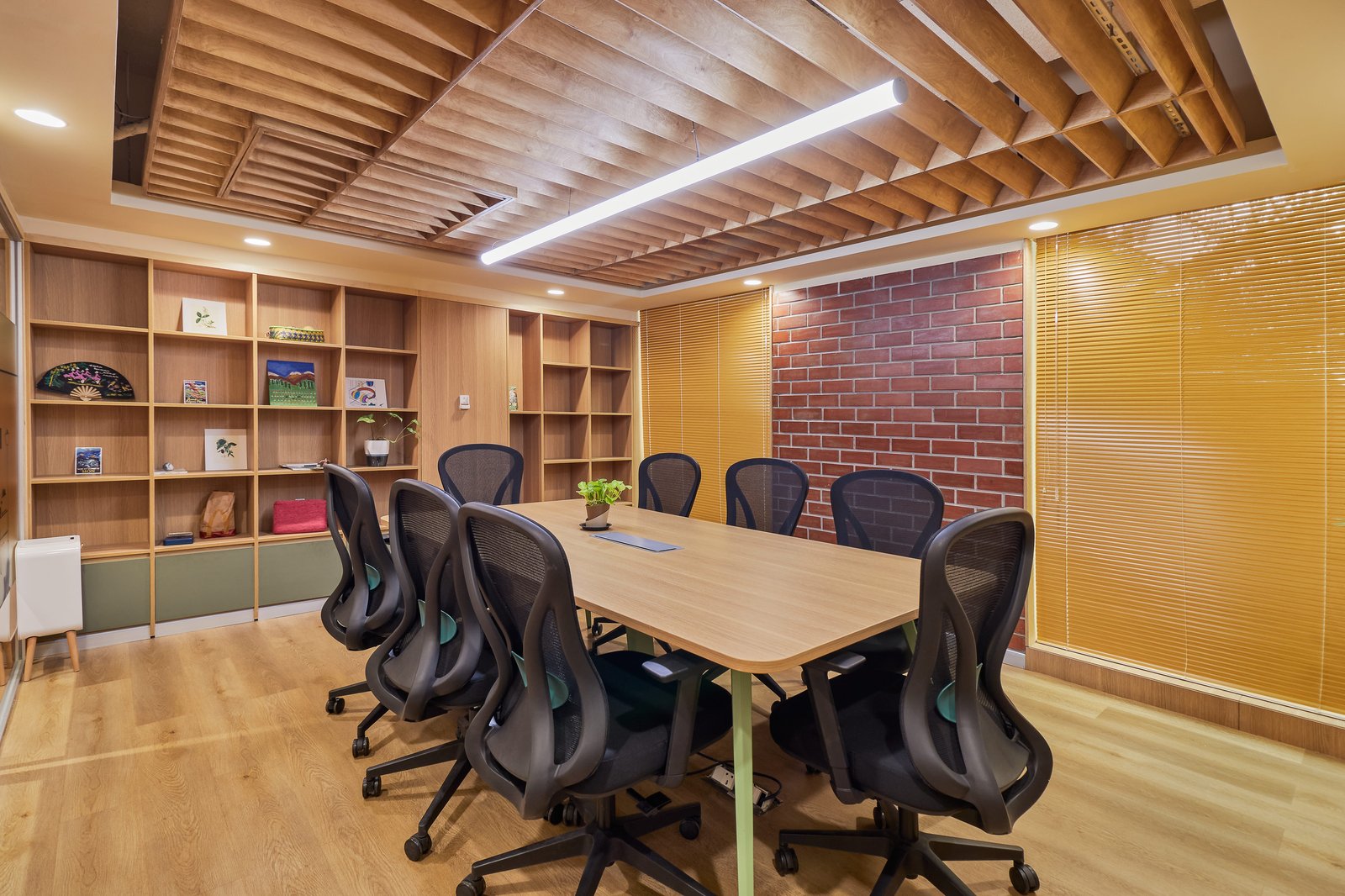
Away's Koramangala space is designed for exactly this gap. Private studios that feel like a team's own office. Quiet floors where sustained thinking is the norm, not the exception. Flexible access through the Book on Demand model, so commitment scales with genuine need rather than a landlord's preference.
The Fourth Wave of Work. And Why Most Spaces Are Built for the Third
The coworking industry is still designing for a version of work that is already obsolete.
The third wave of work was about location flexibility: the promise that you could work from anywhere, collaborate across time zones, and build companies remotely. Coworking spaces were the physical infrastructure of that promise. Open-plan floors, hot desks, meeting pods, a barista at the entrance.
The fourth wave is different in kind, not just degree. AI has absorbed the coordination layer of most knowledge work. Scheduling, summarising, drafting, tracking. What remains, and what is increasingly scarce and valuable, is judgment, taste, and direction. These are the capacities that cannot be delegated or automated. And they are precisely the capacities most damaged by noisy, chaotic, socially pressured environments.
Fourth-wave work requires smaller teams, quieter spaces, and environments optimised for the quality of thinking rather than the quantity of activity. Most coworking spaces in Bangalore were designed for the third wave. Away was designed for the fourth.
That is the structural argument behind every design decision at Koramangala: the lighting, the acoustics, the food programme, the absence of manufactured networking events with branded lanyards. If the space supports the kind of work that actually matters now, everything else follows.
What away Has That Others Do Not
The difference is not in the amenity list. It is in what was deliberately left out.
Other spaces compete on features. Away competes on conditions. The specific conditions that allow a founder to arrive at 9 AM with a hard problem and leave at 6 PM having actually resolved it.
- Acoustic design as a first principle. Not soundproofed pods bolted onto an open floor, but a space where quiet is the default, not the exception you have to find.
- Natural light throughout the day. Not a skylight above the phone booths. Actual exposure to daylight across the primary working area.
- Food that does not wreck the afternoon. The energy crash at 2 PM is not inevitable. It is what happens when the only options are processed snacks and sweet cold coffees.
- Private studios for small teams. The six-to-fifteen-person team has a space that is genuinely theirs, without the overhead of a full managed office contract.
- No manufactured community. No forced networking, no Thursday socials with a facilitator, no pretence that physical proximity creates intellectual trust. Members who want connection find it organically. The space does not perform it for them.
Away also offers yoga at away. Not as a wellness amenity bolted on for optics, but as a considered extension of the same design logic: a body that is not tense and depleted produces better thinking than one that is. The integration is genuine, not branded.
The Honest Comparison
The spaces most frequently cited in Bangalore's coworking conversation serve different needs.
BHIVE is a strong operational choice for teams that need 24x7 access, multiple locations across the city, and cost-efficient hot-desking. It is well-run infrastructure. It is not a design-led environment for deep cognitive work.
WeWork India's Bangalore locations offer enterprise-grade finish, global brand recognition, and well-appointed meeting rooms. For a team that needs to impress clients with a polished address, WeWork delivers. For a founder who needs to think clearly for six hours, the open-plan floor energy is not supportive.
91springboard, Hustlehub, and the aggregator-listed options compete primarily on price per seat and locality coverage. They serve a real market. But the question they optimise for is "how do I get a desk?" not "how do I do my best work?"
Away does not try to serve every market. It serves one market with unusual precision: the professional whose output depends on the quality of their thinking, and who has already discovered that most coworking floors make that harder, not easier.
Away's design thesis is that this is not a niche market. It is the market that creates the most value. And the one the industry has most consistently underserved.
Why Koramangala Is the Right Location for This Kind of Space
Location is not incidental to the away argument. It is part of it.
Koramangala is Bangalore's densest concentration of founder-led companies, boutique agencies, and senior independent professionals. It is not a corporate corridor. It has the texture of a neighbourhood where people are building things rather than executing on behalf of institutions.
A space designed for judgment, taste, and direction belongs in a neighbourhood where those qualities are actually valued. Away in Koramangala is not a coincidence of real estate availability. It is a considered positioning decision.
Work in Bangalore's Most Intentionally Designed Space
Book a day at away Koramangala and find out what it feels like to spend a full working day in an environment built for the quality of your thinking, not the volume of your activity.
Book on Demand →Frequently Asked Questions
How much does a coworking space cost in Bangalore?
Pricing varies significantly by operator and access type. Hot-desk day passes at volume operators start around ₹500 to ₹800 per day. Dedicated desks run from approximately ₹8,000 to ₹15,000 per month. Private studios for small teams are priced on configuration and duration. Away offers Book on Demand access for professionals who want flexibility without a long-term seat commitment. For accurate current pricing, booking directly through the operator's platform gives the most reliable figure.
Which is the best WeWork in Bangalore?
WeWork operates multiple Bangalore locations including Koramangala, Whitefield, and the CBD. For enterprise teams that need polished client-facing infrastructure and a global brand address, WeWork's larger locations deliver well. For founders and small teams seeking genuine cognitive depth rather than corporate polish, the open-plan floor energy at WeWork tends to work against sustained focus. The "best" WeWork depends entirely on what you are optimising for.
Who is WeWork's biggest competitor in Bangalore?
In terms of scale and seat count, BHIVE and IndiQube are WeWork's closest competitors in Bangalore. In terms of the specific market of design-led, depth-first workspaces for small teams and serious independents, away occupies a category that WeWork does not compete in at all. The two are not interchangeable products targeting the same buyer.
Why do coworking spaces fail?
The most common failure mode is optimising for occupancy rather than experience. A coworking space that fills its floor quickly with hot-deskers creates a noisy, transient environment that drives away the members most willing to pay a premium for quality. The economics look good at launch and deteriorate as retention collapses. Spaces also fail by trying to serve every segment simultaneously. Enterprise teams, freelancers, early-stage startups, remote workers. And ending up with a design that serves none of them particularly well. Industry data consistently shows that member experience and community quality are the top drivers of coworking retention, yet most spaces under-invest in both.
Is away only for large teams or can individuals use it?
Away is well-suited to individuals as well as small teams. Senior independents, consultants, and solo founders are a core part of the membership. The Book on Demand model specifically supports professionals who want access without a fixed monthly seat commitment. What unifies away's members is not team size but the nature of their work: cognitively demanding, output-oriented, and incompatible with acoustically hostile open-plan floors.
What makes away different from other coworking spaces in Koramangala?
The primary difference is design intent. Most coworking spaces in Koramangala are designed for occupancy and feature variety. Away is designed around the specific conditions that allow high-quality thinking to happen: acoustic calm, natural light, private space for small teams, and the deliberate absence of manufactured social programming. The measure of success at away is not how many members are in the building. It is whether the members who are there did their best work that day.
.png)